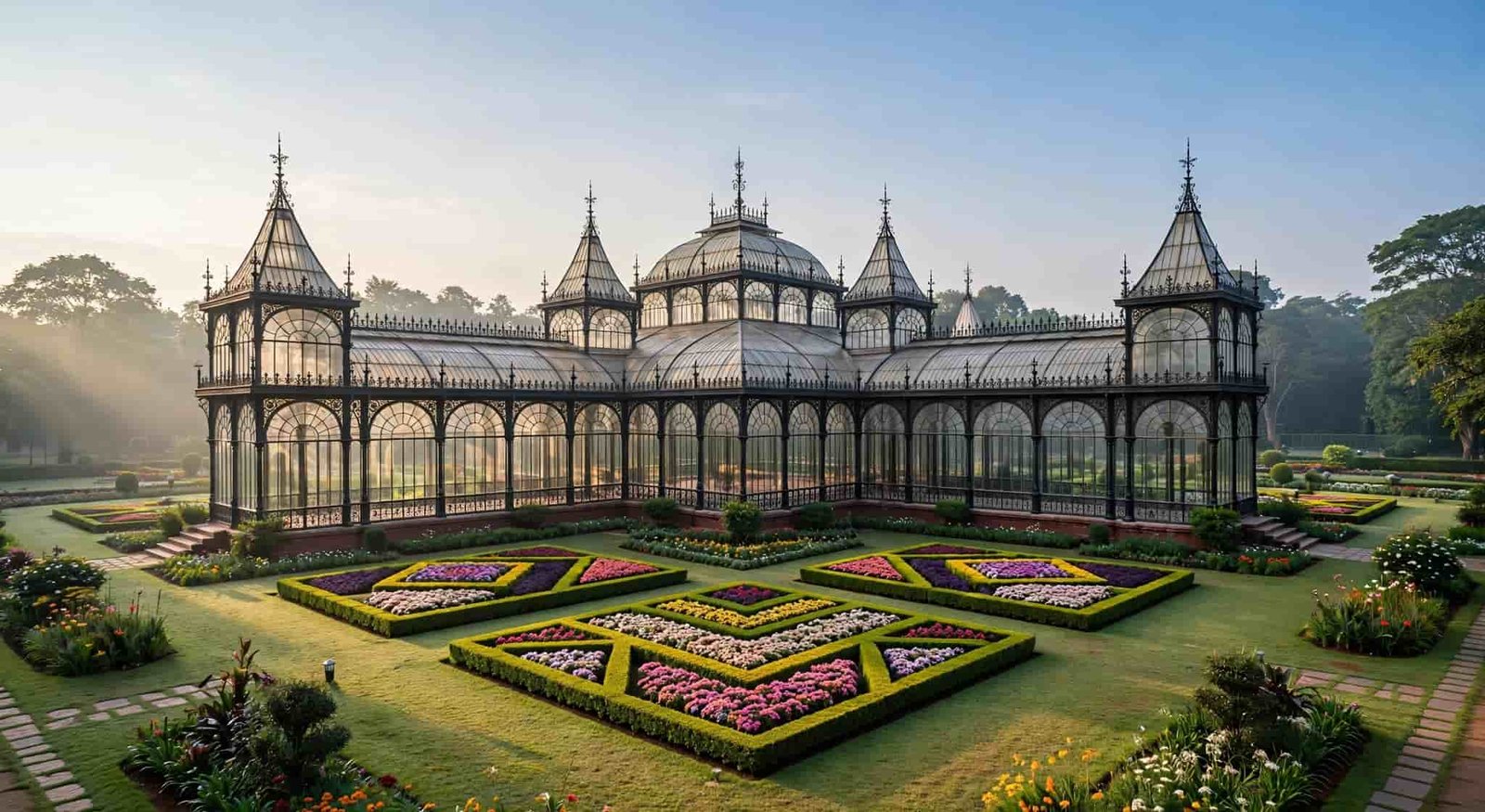
The first time most people see the Glass House inside Lalbagh Botanical Garden, they pause. It sits right in the middle of the garden — a large iron-and-glass structure that feels both grand and slightly out of place in the middle of Bangalore’s greenery. Locals have been calling it the jewel of Lalbagh for decades, and once you stand in front of it, you understand why.
This is not just a building that hosts flower shows twice a year. It is one of the earliest major pre-fabricated iron-and-glass structures built in India, a surviving piece of Victorian design that has watched the city grow around it for more than 130 years. Whether you come during the crowded flower shows or on a quiet weekday morning, the Glass House remains the strongest visual anchor of the entire garden.
This guide covers everything you need to know — its real history, how it was built, what it looks like up close, how to experience it properly in 2026, and practical tips that will help you make the most of your visit.
How the Glass House Came into Existence
The story of the Glass House begins with John Cameron, the Superintendent of Lalbagh who took charge in 1874. Cameron was a Kew-trained botanist and one of the most influential figures in the garden’s history. Under him, Lalbagh expanded significantly and shifted from a royal pleasure garden into a more systematic botanical institution.

Cameron felt the need for a permanent conservatory. Until then, flower shows were held near the bandstand in the open. He wanted a proper structure where exotic plants could be acclimatised and where exhibitions could be organised under a roof.
The opportunity arrived with the visit of Prince Albert Victor, grandson of Queen Victoria. On 30 November 1889, the prince laid the foundation stone during a formal reception hosted by Maharaja Chamaraja Wodeyar. The building was named the Albert Victor Conservatory in his honour. Over the years, people simply started calling it the Glass House, and the name stuck.
The iron framework was manufactured by Walter Macfarlane and Company’s Saracen Foundry in Glasgow, Scotland. The glass came from Belgium. The parts were shipped to India and assembled on site, making it one of the early examples of pre-fabricated construction in the country. The structure was completed in the early 1890s and quickly became the centrepiece of Lalbagh.
Interestingly, the original Crystal Palace in London (which inspired the design) was destroyed by fire in 1936. That leaves the Lalbagh Glass House as one of the few remaining examples of that particular style of Victorian glass architecture still standing and actively used.
Architecture and Design
The Glass House is shaped like a large cross. The main central hall measures roughly 160 feet by 80 feet. Two side wings, each about 60 feet by 40 feet, complete the layout. Only a low three-foot basement wall is made of masonry. Everything above it is iron and glass.
When it was first built, the sides were covered with wooden trellises that supported 56 different species of creepers. These were later removed to allow better air circulation in Bangalore’s climate. The open design we see today is actually more practical for local weather than a fully enclosed Victorian conservatory would have been.
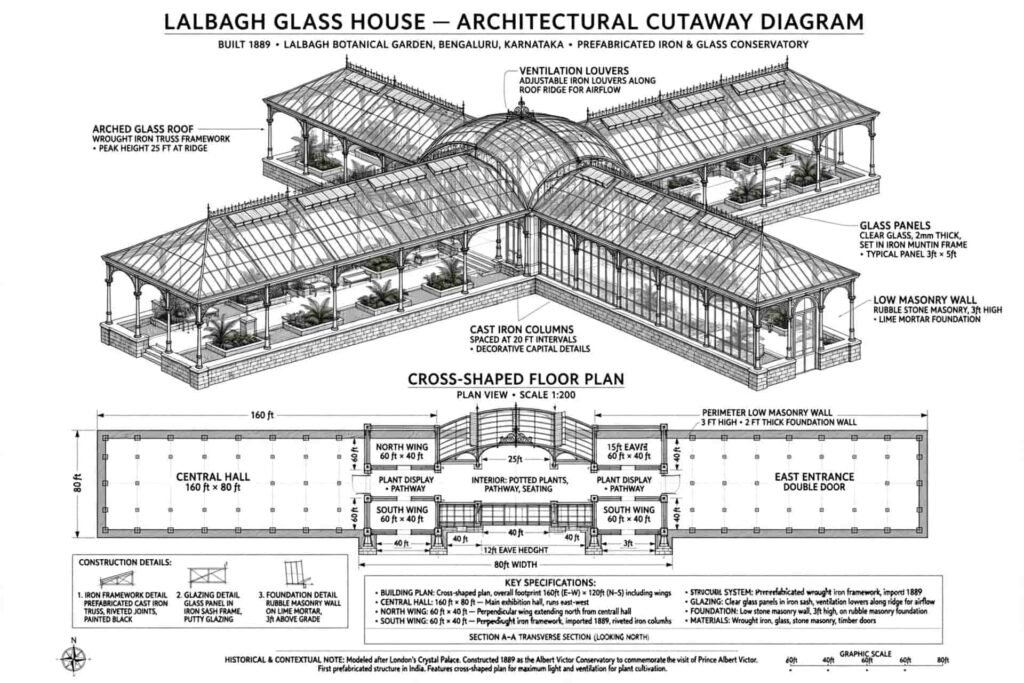
In 2004 the structure went through a major renovation that cost around ₹5 crore. Workers replaced a large number of glass panels (over 3,500 unbreakable panes were used) and strengthened parts of the iron framework with galvanised steel. The renovation carefully retained the original character while making the building safer for the heavy footfall it receives during flower shows.
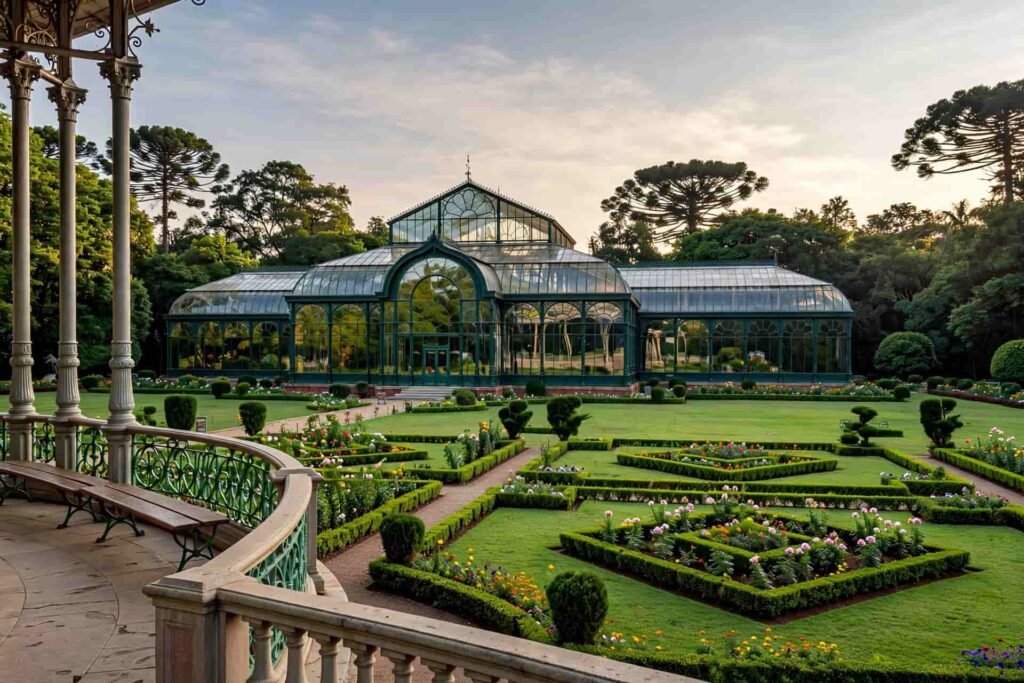
If you walk around the building, you will notice the well-maintained lawns and geometric flower beds that surround it. One of the best views of the entire structure is from the nearby bandstand, especially in the soft light of early morning or late afternoon.
The Glass House and the Lalbagh Flower Shows
The Glass House is best known today as the home of the famous Lalbagh Flower Shows. These shows take place twice a year — around Republic Day in January and Independence Day in August — and have become one of Bangalore’s most popular seasonal traditions.
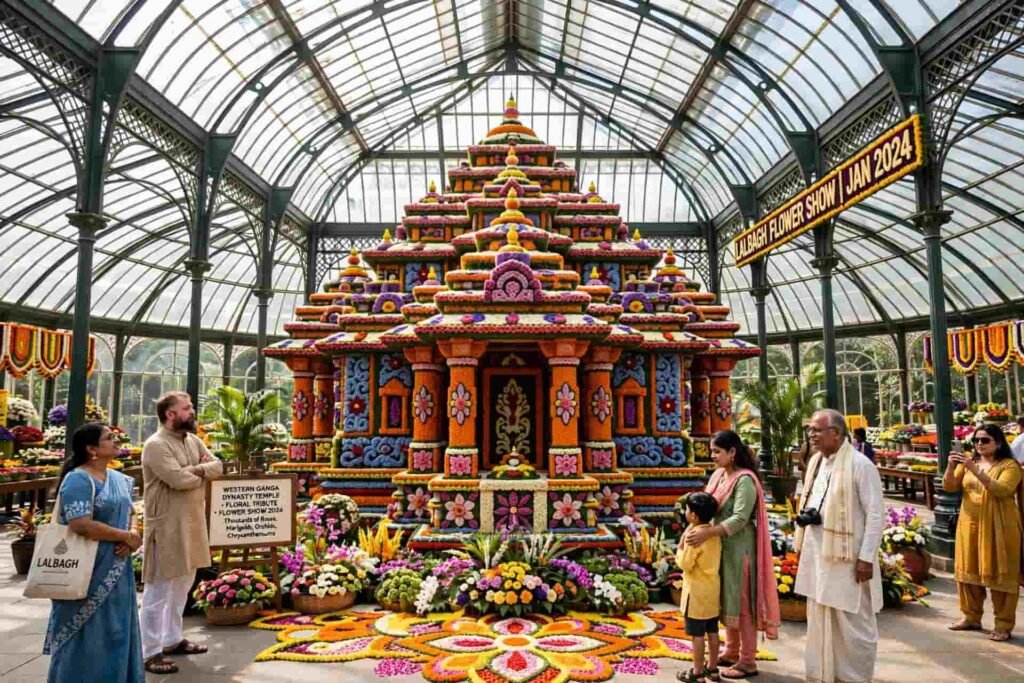
During the shows, the entire interior is transformed. The Horticulture Department creates large thematic floral installations using thousands of flowers and plants. Themes change every year and have included historical figures, freedom fighters, literary personalities, and important dynasties of Karnataka. In 2026, the Independence Day show focused on the Western Ganga dynasty, with elaborate floral recreations of temples, inscriptions and historical scenes.
Even on days when there is no flower show, the Glass House remains open for viewing during regular garden hours. The interior may not always have special displays, but the structure itself is worth spending time with.
How to Experience the Glass House Properly
The Glass House sits almost in the centre of Lalbagh. From most entry points you can reach it within 10 to 15 minutes of walking.
- From the West Gate (closest to Lalbagh Metro Station), walk straight and slightly towards the right.
- From the East Gate, the walk is longer but pleasant as it takes you past the lake area.
- From the North and South gates, simply follow the main pathways towards the central lawns.
The best times to visit are early morning (before 9 AM) and late afternoon. Midday light can create strong reflections on the glass and make photography harder. During flower shows, weekdays are noticeably quieter than weekends. If you want space to walk around and take photographs without large crowds, aim for a weekday morning.
Many visitors spend 30 to 45 minutes just around the Glass House and its immediate surroundings before moving on to other parts of the garden.
What to Combine with Your Visit
Once you are at the Glass House, you are in the heart of Lalbagh. From here you can easily walk to several other major attractions:
- The bandstand and the open lawns around it
- The Rose Garden
- The Bonsai collection
- Lalbagh Lake
- The Peninsular Gneiss rock and Kempegowda Tower (a bit further away)
A well-planned visit can cover the Glass House and two or three nearby spots without feeling rushed.
Practical Tips for 2026 Visitors
- Wear comfortable walking shoes. You will cover more ground than you expect.
- Carry water, especially between March and June.
- Mobile photography is free. Professional camera equipment may attract a small fee or require prior permission for commercial use.
- During flower shows, expect longer queues and heavier crowds. Arrive early if possible.
- Follow the garden rules carefully. Recent guidelines have increased fines for activities such as plucking flowers, climbing, littering, and certain types of commercial photography.
- The Glass House looks particularly good after light rain or on slightly overcast days, when the glass reflects the surrounding greenery more clearly.
Frequently Asked Questions
Is the Glass House open every day?
Yes. It follows the regular opening hours of Lalbagh Botanical Garden. During flower shows the timings are often extended.
Do I need a separate ticket for the Glass House?
On normal days, the regular garden entry ticket is sufficient. During flower shows, special tickets apply for the entire event, which includes access to the Glass House displays.
Can I go inside the Glass House when there is no flower show?
Usually yes, though the interior may not have special exhibitions. You can still walk around and appreciate the architecture.
What is the best time to photograph the Glass House?
Early morning and late afternoon offer the softest light. Avoid harsh midday sun if possible.
How much time should I spend at the Glass House?
Most visitors spend between 30 and 45 minutes. During flower shows you may want longer.
Is the Glass House accessible for elderly visitors or those with mobility issues?
The surrounding paths are relatively flat, but the garden as a whole involves a fair amount of walking. Battery-operated vehicles are sometimes available inside Lalbagh.
Has the structure changed much since it was built?
The basic form remains the same. The biggest change came during the 2004 renovation, which replaced glass panels and strengthened the framework while preserving the original design.
Final Thoughts
The Glass House is more than a landmark. It is a working piece of history that still serves the purpose John Cameron imagined for it in the late 19th century. In a city that changes quickly, it remains one of the few places where you can stand and feel a clear connection to another era.
Whether you visit during the colourful chaos of a flower show or on a quiet weekday morning when the light is soft and the crowds are thin, the structure rewards those who take the time to look closely. Walk around it. Look up at the iron frame. Notice how the glass catches the sky and the trees. It is one of those rare places in Bangalore that still feels special every time you return.
If you are planning a visit to Lalbagh, make the Glass House one of your main stops. And if you happen to come during one of the flower shows, you will understand why generations of people keep coming back to this iron-and-glass hall year after year.
Related reading on this site:
- Lalbagh Botanical Garden Timings 2026
- Lalbagh Ticket Price & Entry Fee 2026
- Lalbagh Flower Show 2026 Complete Guide
- How to Reach Lalbagh by Metro
Have you visited the Glass House during a flower show or on a regular day? Share your experience in the comments — it helps other readers plan better visits.

Chavi Devi is the founder and author of Lalbagh Botanical Garden. Based in Bengaluru, she has been documenting Lalbagh for the last 2 years – from ticket prices and timings to hidden rules and photography permissions. She visits the garden regularly to verify information and creates simple, practical guides for first-time visitors.
Read More About Chavi→ About Us