Lalbagh Botanical Garden History: From Hyder Ali to Tipu Sultan
Lalbagh Botanical Garden is one of those places in Bengaluru where a normal walk can turn into a history lesson. The garden is now known for its old trees, plant collections, Glass House, lake and flower shows, but its story began more than two and a half centuries ago.
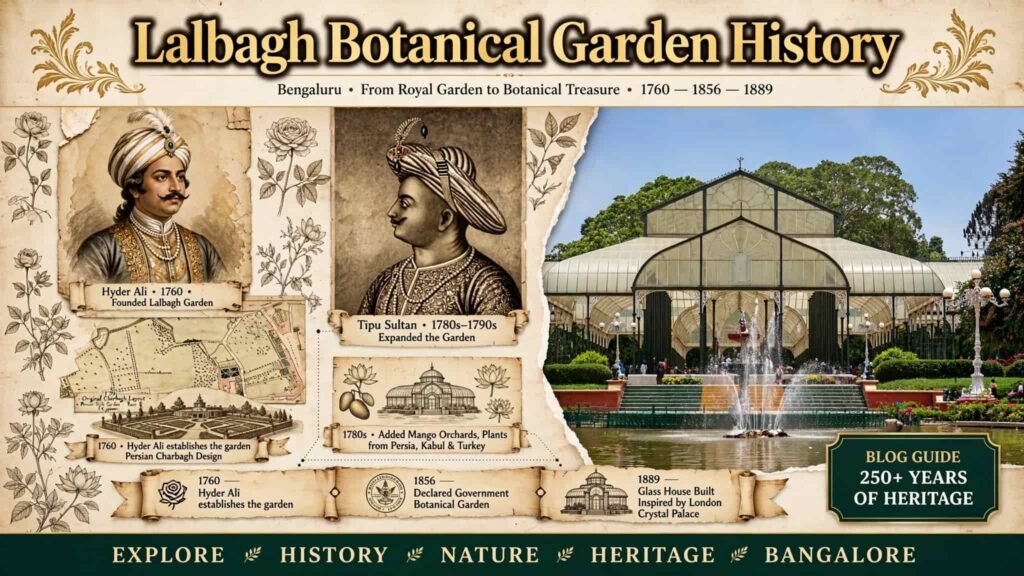
The garden was started in 1760 under Hyder Ali, the ruler of Mysore, and was later expanded during the reign of his son, Tipu Sultan. Over the following centuries, Lalbagh changed from a royal garden into an important horticultural institution and eventually into one of Bengaluru’s best-known public gardens.
Today, the garden covers about 240 acres and continues to have a role in horticulture, plant conservation and botanical education.
How Lalbagh Began in the 18th Century
The origins of Lalbagh go back to 1760, when Hyder Ali commissioned the garden. At that time, Bengaluru was very different from the large metropolitan city it is today. Lalbagh began as a royal horticultural landscape rather than a public city park.
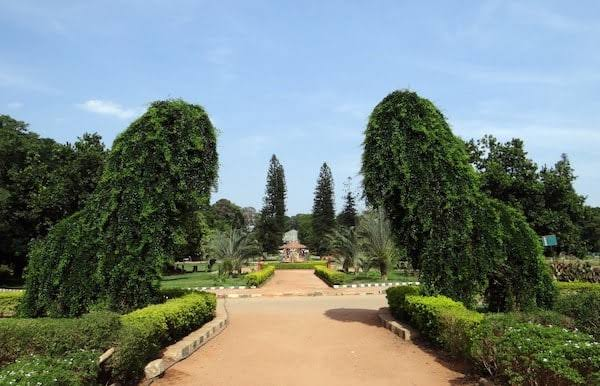
Karnataka Tourism describes Hyder Ali’s garden as being influenced by garden traditions associated with Mughal landscapes. The early garden was considerably smaller than the Lalbagh visitors know today. Incredible India notes that the original area was around 40 acres before later expansion.
The purpose was not simply to create a pleasant place for walking. Plants and gardening were important parts of royal estates, and Lalbagh gradually developed a reputation for collecting and cultivating plants from different regions.
That botanical character is one of the reasons Lalbagh’s history remains relevant even today.
Tipu Sultan and the Expansion of the Garden
After Hyder Ali, his son Tipu Sultan continued developing Lalbagh.
Tipu Sultan is associated with expanding the garden’s plant collection and introducing plants from outside the region. Karnataka Tourism notes that plants and trees were brought from places including Persia, Afghanistan and France.
This period helped shape Lalbagh’s identity as more than a conventional royal garden.
The idea of collecting plants from different parts of the world also explains why Lalbagh’s botanical character has remained important for so long. Instead of being designed around a single type of plant or landscape, it gradually developed into a place where different species, gardening techniques and horticultural traditions could coexist.
That legacy is still visible in the garden’s plant collections today.
From Royal Garden to Horticultural Institution
Lalbagh’s history did not stop with the Mysore rulers.
During the later British period, the garden underwent further development and acquired greater importance as a horticultural and botanical institution. Official tourism material describes Lalbagh as a centre connected with botanical research, horticulture education and conservation.
This is an important part of Lalbagh’s story because the garden gradually moved beyond its original role as a royal landscape.
Its value became connected with:
- plant introduction and cultivation
- horticultural education
- botanical collections
- conservation
- public recreation
- flower exhibitions
That combination is what makes Lalbagh different from an ordinary urban park.
The Glass House Changed Lalbagh’s Identity Again
One of the most recognizable additions to Lalbagh’s heritage is the Glass House.
The Glass House was built in the late 19th century and was inspired by London’s Crystal Palace. Karnataka Tourism and Incredible India both identify it as one of Lalbagh’s major historic structures.
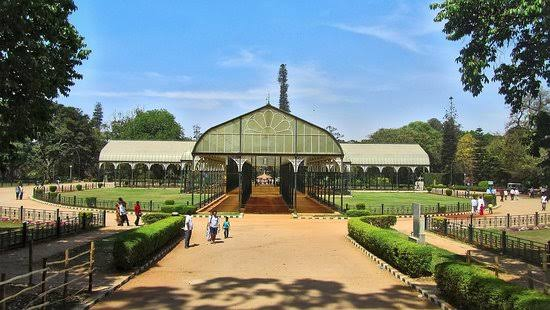
The building eventually became closely associated with Lalbagh’s famous flower shows.
The Ministry of Tourism’s Utsav portal notes that flower exhibitions had been held at Lalbagh even before the Glass House and that the Glass House later became the central venue for these exhibitions.
This connection between historic architecture and horticultural exhibitions is still visible whenever Lalbagh hosts a major flower show.
Lalbagh’s Older Landmarks
The garden’s history is not represented by one building alone.
Several features inside Lalbagh connect different periods of Bengaluru’s past.
The Peninsular Gneiss rock formation is a geological landmark estimated at more than 3 billion years old. A historic Kempegowda watchtower stands on the rocky outcrop.
The garden also contains its lake, old trees, Bandstand, Floral Clock, Topiary Garden, Bonsai Garden and other horticultural features. Karnataka Tourism specifically highlights several of these as important attractions.
Some of these features are relatively modern compared with the original garden, but together they show how Lalbagh has continued to evolve.
Why Lalbagh’s History Still Matters
It is easy to look at Lalbagh simply as a large green space in Bengaluru.
Its history tells a different story.
The garden began as a royal project in the 18th century, developed further under Tipu Sultan, changed during the colonial period and eventually became a major public horticultural institution. Its present-day identity is therefore the result of several different phases rather than one moment in history.
That is also why visitors can find such different experiences within the same 240-acre garden.
One section may feel like a quiet botanical collection. Another contains a historic structure. Somewhere else there is an ancient geological formation, while another part is used for a large public flower exhibition.
A Simple Timeline of Lalbagh
1760 — Hyder Ali commissioned the original Lalbagh garden.
Tipu Sultan’s reign — The garden was expanded and its collection of plants was developed further.
19th century — Lalbagh underwent further horticultural development during the British period.
Late 19th century — The Glass House was added and later became closely associated with flower exhibitions.
20th century onward — Lalbagh continued developing as a public botanical and horticultural space.
Today — The garden covers around 240 acres and continues to combine horticulture, conservation, education, recreation and heritage.
What Makes Lalbagh Historically Different?
Lalbagh’s biggest historical value comes from the fact that several kinds of heritage exist in the same place.
There is royal history connected with Hyder Ali and Tipu Sultan. There is Bengaluru’s early urban history represented by the Kempegowda watchtower. There is geological heritage in the ancient rock formation. There is colonial-era architecture in the Glass House. And there is horticultural heritage represented by the garden’s long-standing plant collections.
That combination makes Lalbagh much more than a conventional city park.
If you walk through it with that history in mind, many of its individual attractions start making more sense.

Suresh Kumar is the founder and editor of LalbaghBotanicalGarden.com, a website dedicated to helping visitors plan their trips to Lalbagh Botanical Garden with accurate, well-researched information on timings, fees, history, and attractions. Content is compiled and fact-checked using official sources and government tourism records.
Email: worldtuch0007@gmail.com