








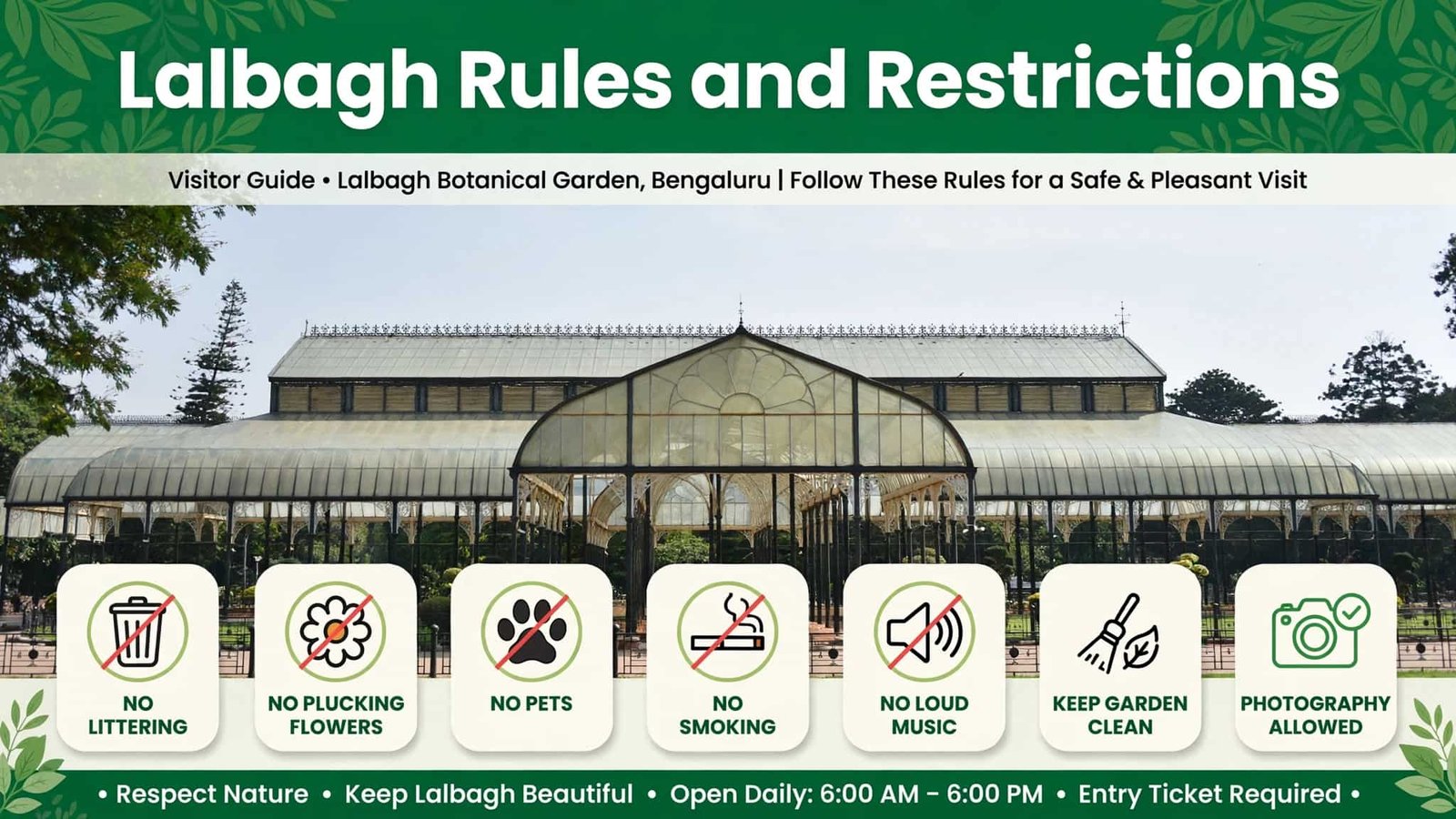
Lalbagh is a working botanical institution as much as it is a public garden — it houses rare and often centuries-old plant specimens under active conservation by the Karnataka Horticulture Department. That means a handful of rules exist not to inconvenience visitors, but to protect the garden itself. Here’s a practical rundown of what to expect.
Photography and Filming
Casual photography with a phone or a regular camera is allowed throughout the garden and is, in fact, one of the biggest draws for visitors — the Glass House, the lake, and the rose garden are among the most photographed spots in Bangalore. That said:
- Professional shoots (pre-wedding shoots, commercial photography, film or ad shoots) typically require prior permission and a separate fee from the Horticulture Department.
- Tripods and larger camera rigs may attract a small additional camera fee at some gates — check at the counter if you’re carrying serious equipment.
- Drone photography is generally restricted, as is the case across most public spaces in Bangalore, and would require separate clearance.
How Permission Works for Professional Shoots
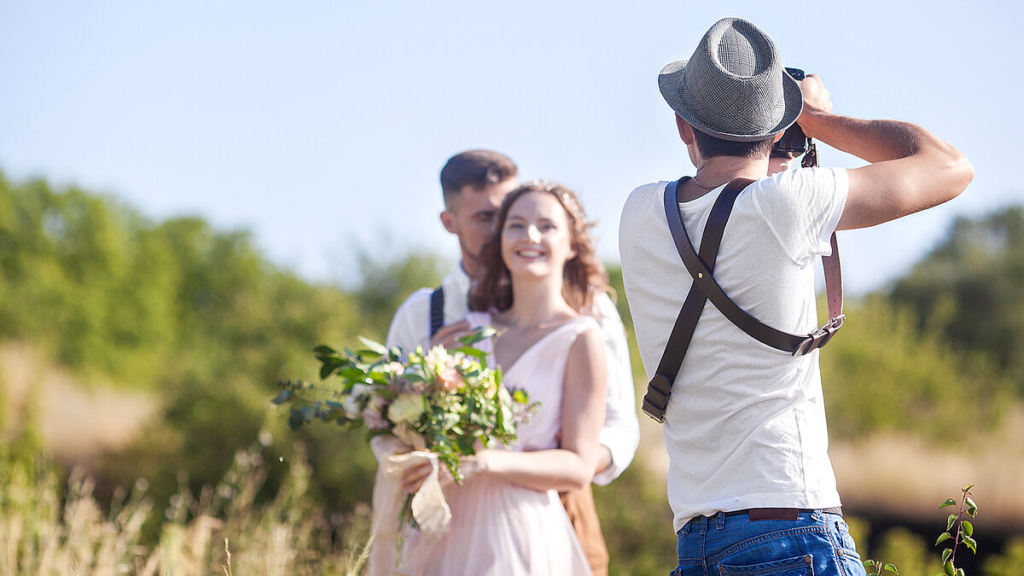
If you’re planning a pre-wedding shoot, a fashion shoot, or any commercial photography inside Lalbagh, the general process involves reaching out to the Horticulture Department’s administrative office ahead of time, specifying the date, purpose, and expected crew size. Approval typically comes with a separate fee structure from regular visitor entry, and may include conditions around which zones of the garden are accessible for shoots and what equipment (lighting rigs, reflectors, portable backdrops) is permitted. Because this process and its fees can change, it’s best confirmed directly with the department rather than assumed from past visitor experiences.
Food and Drink
- Outside food is generally discouraged inside the garden’s core lawns and heritage zones, largely to keep the grounds litter-free and to avoid disturbing the resident bird population.
- Bottled water is fine to carry.
- Littering is taken seriously — bins are placed at regular intervals, and visitors are expected to use them.
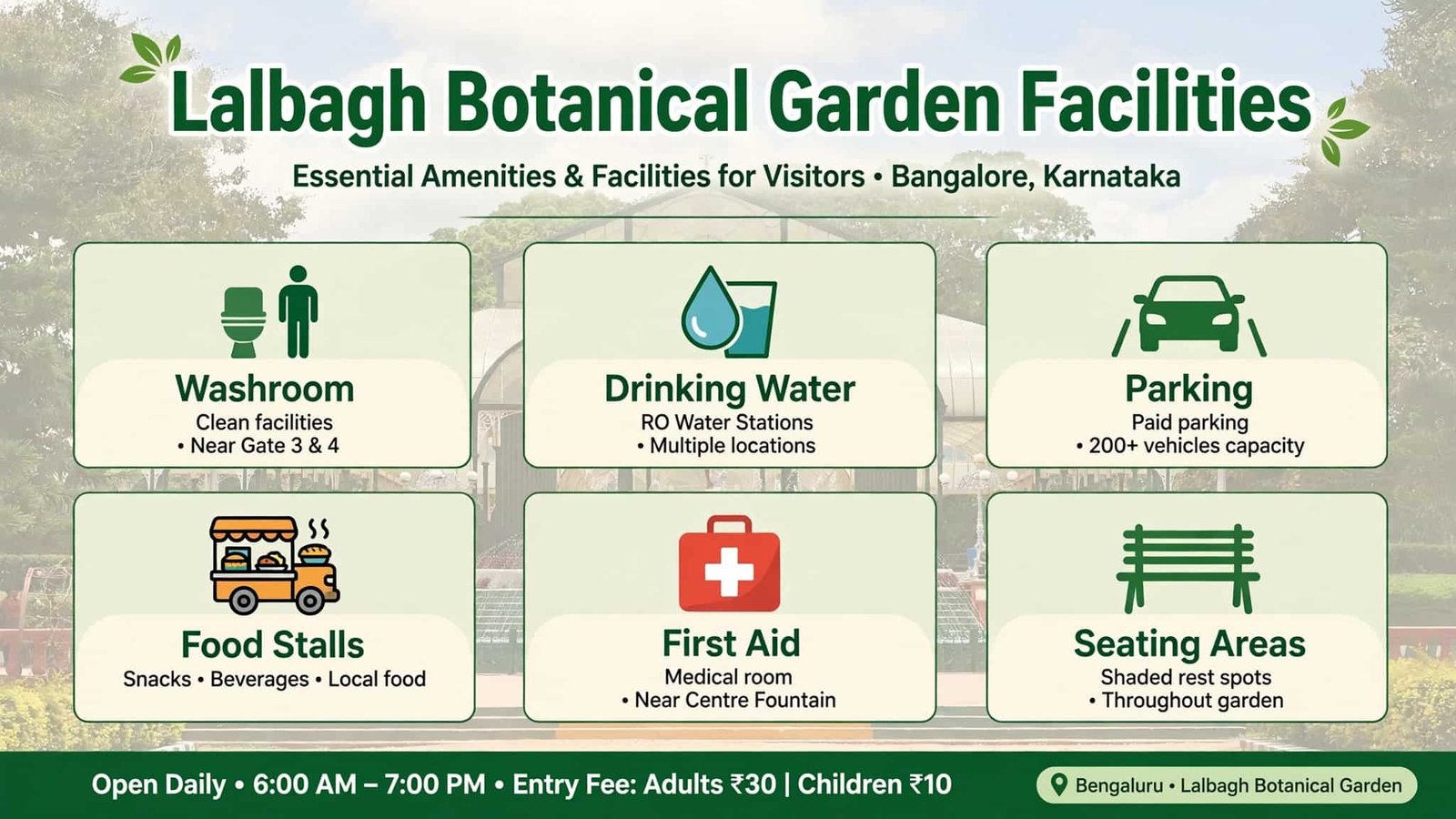
- There isn’t a formal in-garden food court, so if you’re planning a longer visit, eat before you go or plan to step out toward nearby areas like VV Puram’s food street once you’re done exploring.
Pets
Pets, including dogs, are generally not permitted inside Lalbagh, in line with rules at most government-managed botanical gardens in India, largely to protect the resident wildlife, ground-nesting birds, and delicate plant beds. If you’re planning a visit, it’s best to leave pets at home rather than assume they’ll be allowed at the gate.
Plucking Flowers or Touching Plants
This one should be obvious but is worth stating plainly: plucking flowers, climbing trees, or handling plant specimens is not allowed. Many of the trees inside Lalbagh are over a century old, and some — like the roughly 300-year-old White Silk Cotton tree — predate the garden’s formal establishment. Treat the plant life the way you would a museum exhibit.
Walking Paths and Lawns
Most of Lalbagh’s lawns are open for visitors to sit, relax, or have a picnic-style break (minus outside food, as noted above), but certain specially cultivated beds — particularly around the Bonsai Garden, Topiary Garden, and seasonal flower displays — are fenced off and meant to be viewed rather than walked through.
Smoking and Alcohol
Smoking and alcohol consumption are prohibited within the garden premises, consistent with rules at public parks across Bangalore.
Vehicles
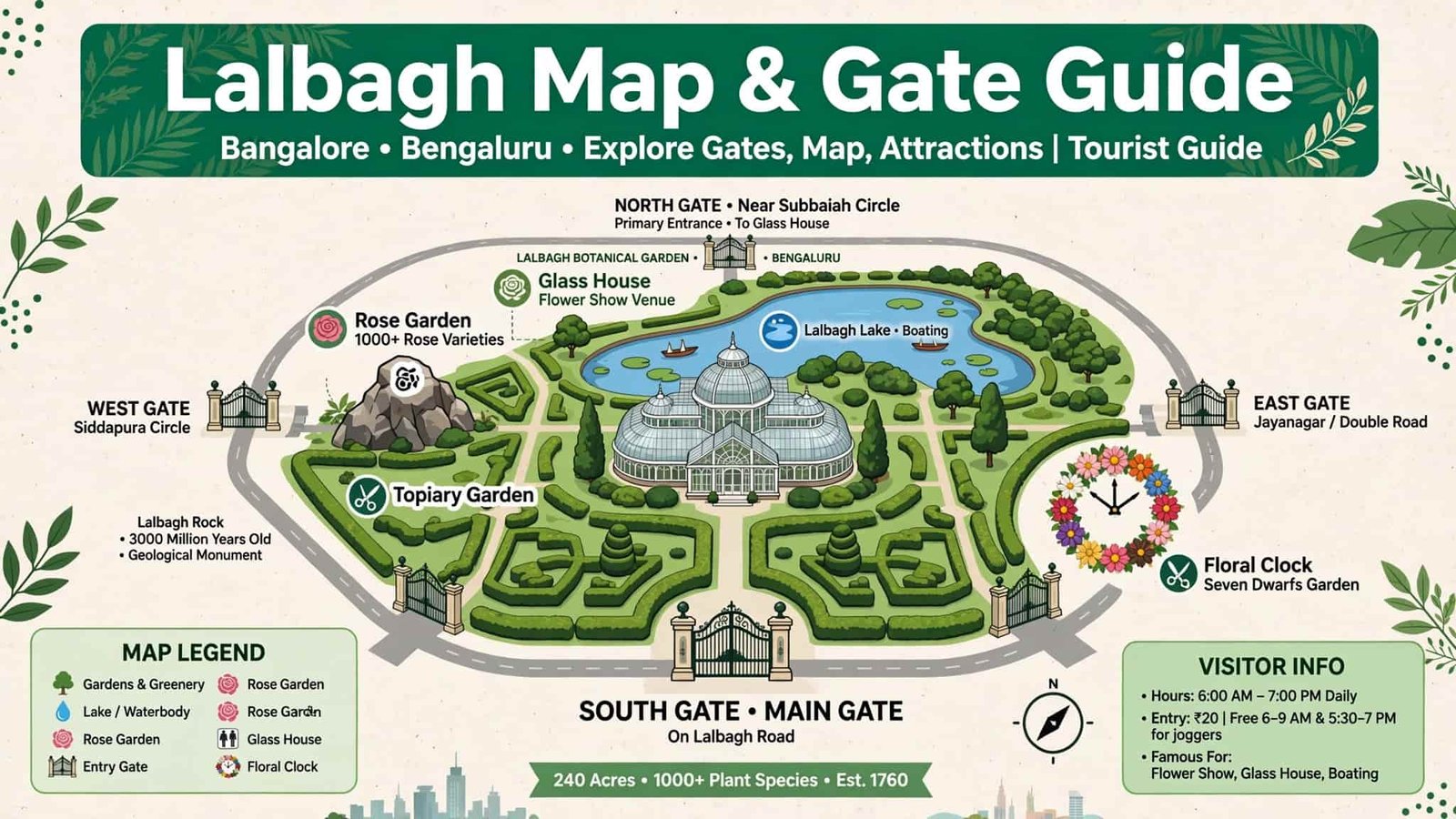
Private vehicles are not permitted inside the garden itself — you’ll park outside near your entry gate and walk in. See our separate guide on parking near Lalbagh for details on where to leave your vehicle at each gate.
Rules That Tighten During the Flower Show
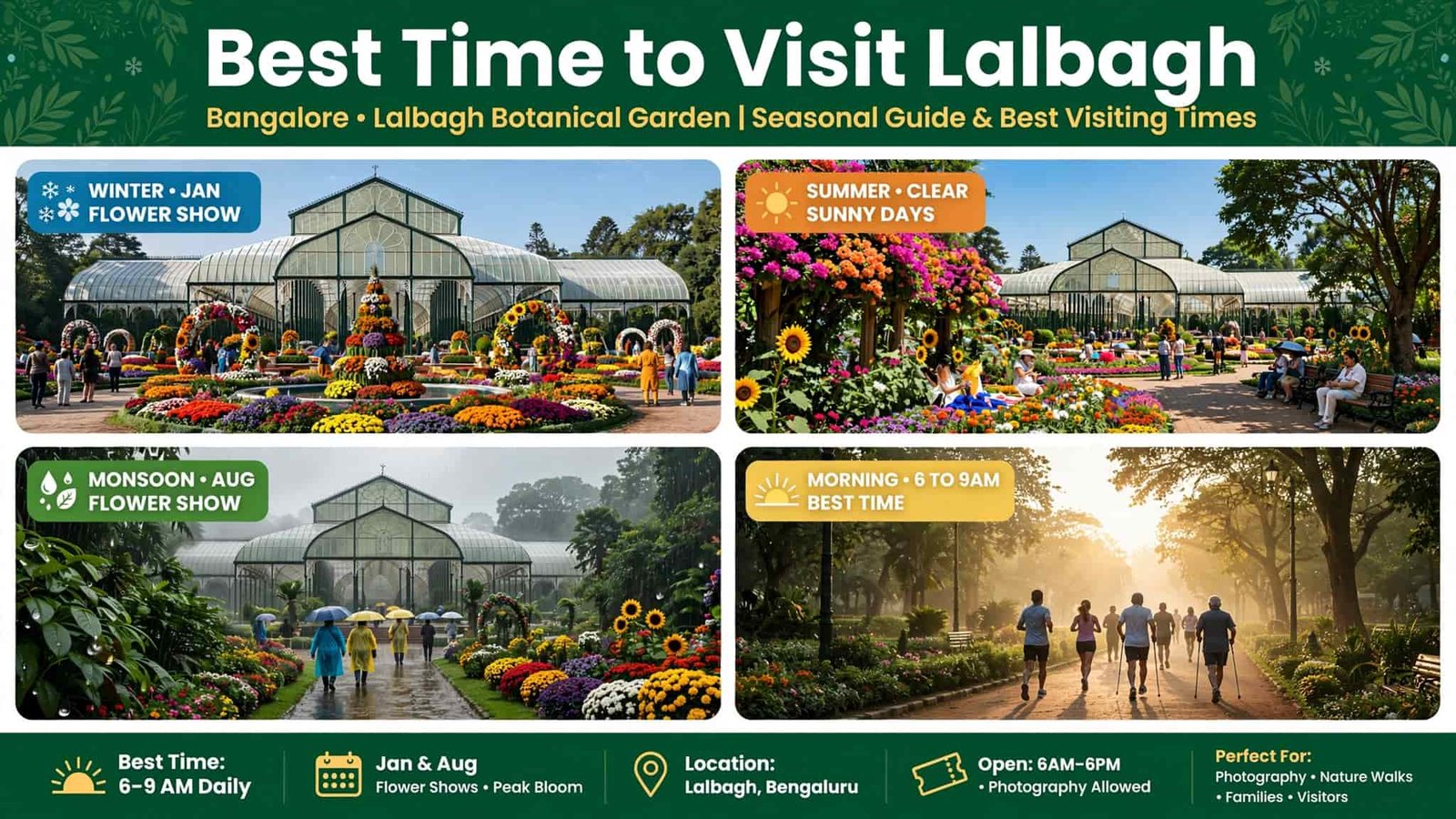
A handful of restrictions become noticeably stricter during the Republic Day and Independence Day flower shows, given the scale of crowds involved. Expect more visible security personnel, barricaded queue lines, restrictions on large bags near the main exhibition displays, and stricter enforcement of no-touching rules around the themed floral arrangements, which are far more delicate and elaborate than the garden’s everyday plant beds. If you’re visiting during the show specifically to photograph the displays, arriving early tends to make it easier to get a clear shot before both crowds and stricter crowd-control barriers make close-up photography harder.
Accessibility Considerations
While Lalbagh doesn’t have extensive wheelchair-specific infrastructure across its full 240 acres, the main paved paths near the North and West Gates, and the loop around the lake, are relatively level and manageable for visitors with mobility considerations. Uneven or sloped sections are more common near the rocky outcrop and elevated garden areas, so it’s worth planning your route with that in mind if accessibility is a concern for anyone in your group.
General Visitor Etiquette
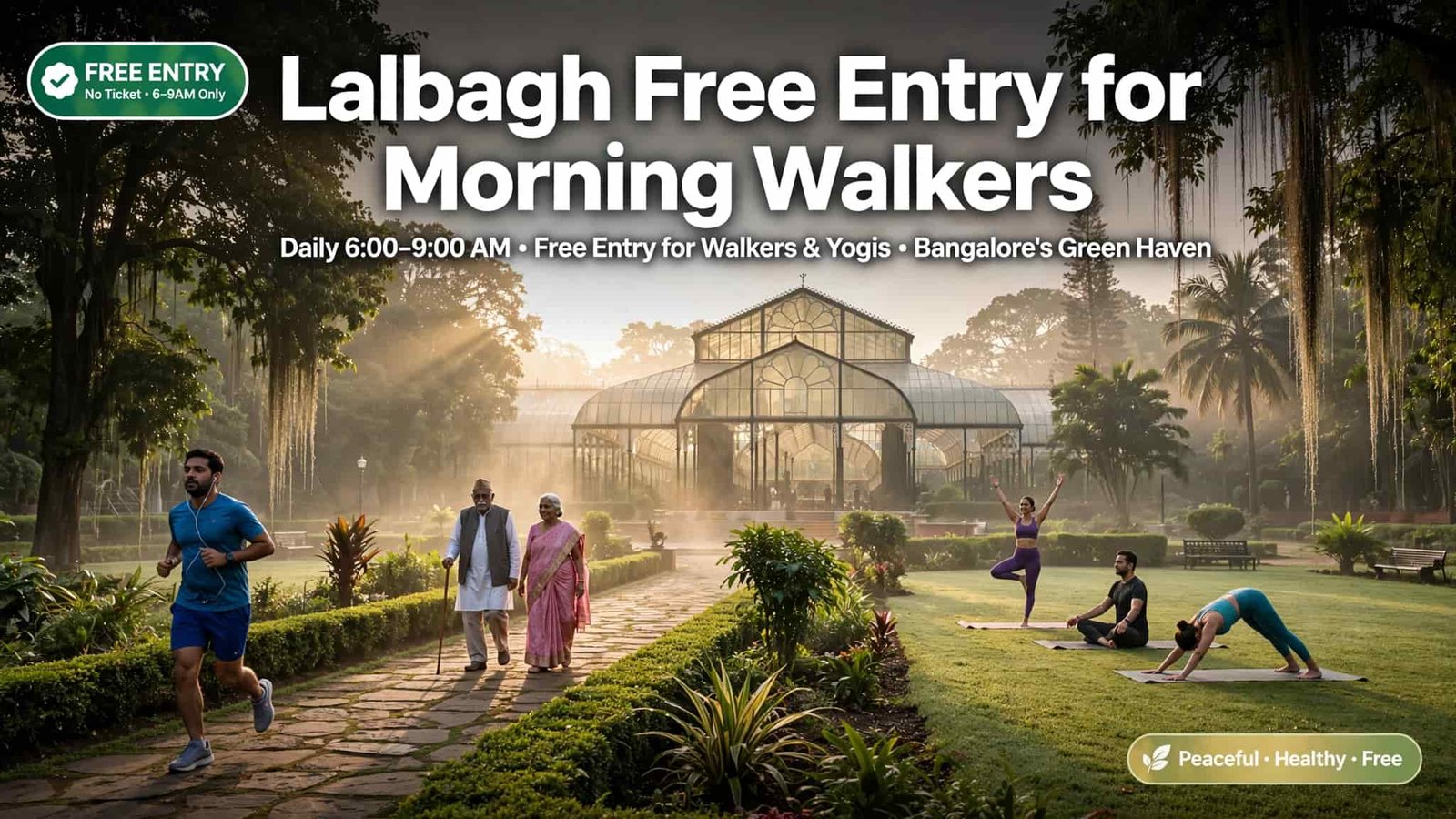
- Keep noise levels reasonable — Lalbagh is used heavily by morning walkers, elderly visitors, and birdwatchers who value the quiet.
- Groups conducting fitness sessions, yoga classes, or informal gatherings should be mindful of shared space, particularly during the early morning walker hours.
- Respect queue order at gates, especially during flower show season when crowds are heaviest.
None of these rules are unusual for a heritage botanical garden — they exist to keep Lalbagh in the condition that’s made it a 250-year-old institution, and most visitors barely notice them because common sense already covers most of it.
Also See: Lalbagh Ticket Booking: Online or At the Counter?
Suresh Kumar is the founder and editor of LalbaghBotanicalGarden.com, a website dedicated to helping visitors plan their trips to Lalbagh Botanical Garden with accurate, well-researched information on timings, fees, history, and attractions. Content is compiled and fact-checked using official sources and government tourism records.
Email: lalbaghgardenbangalore@gmail.com