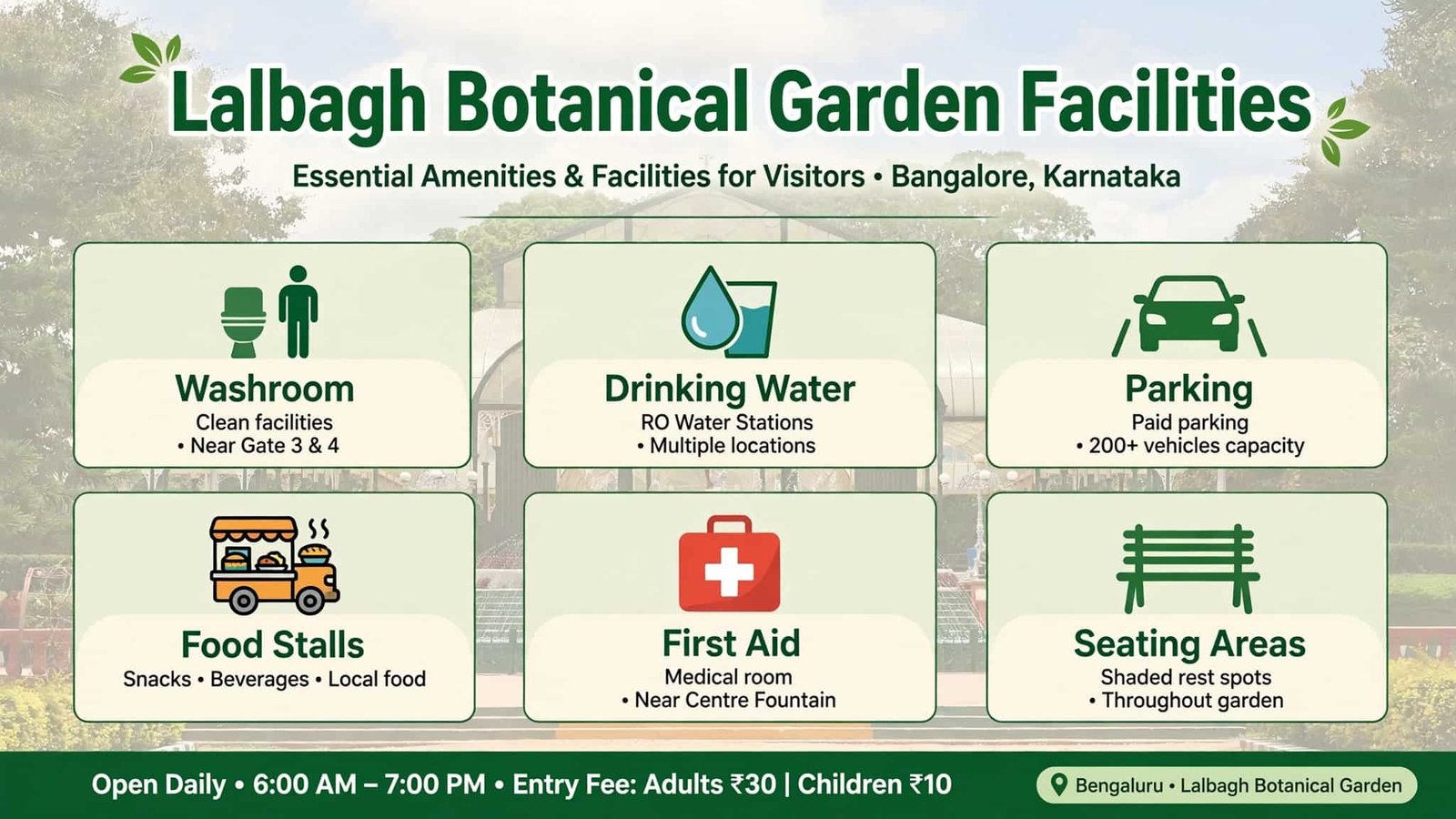









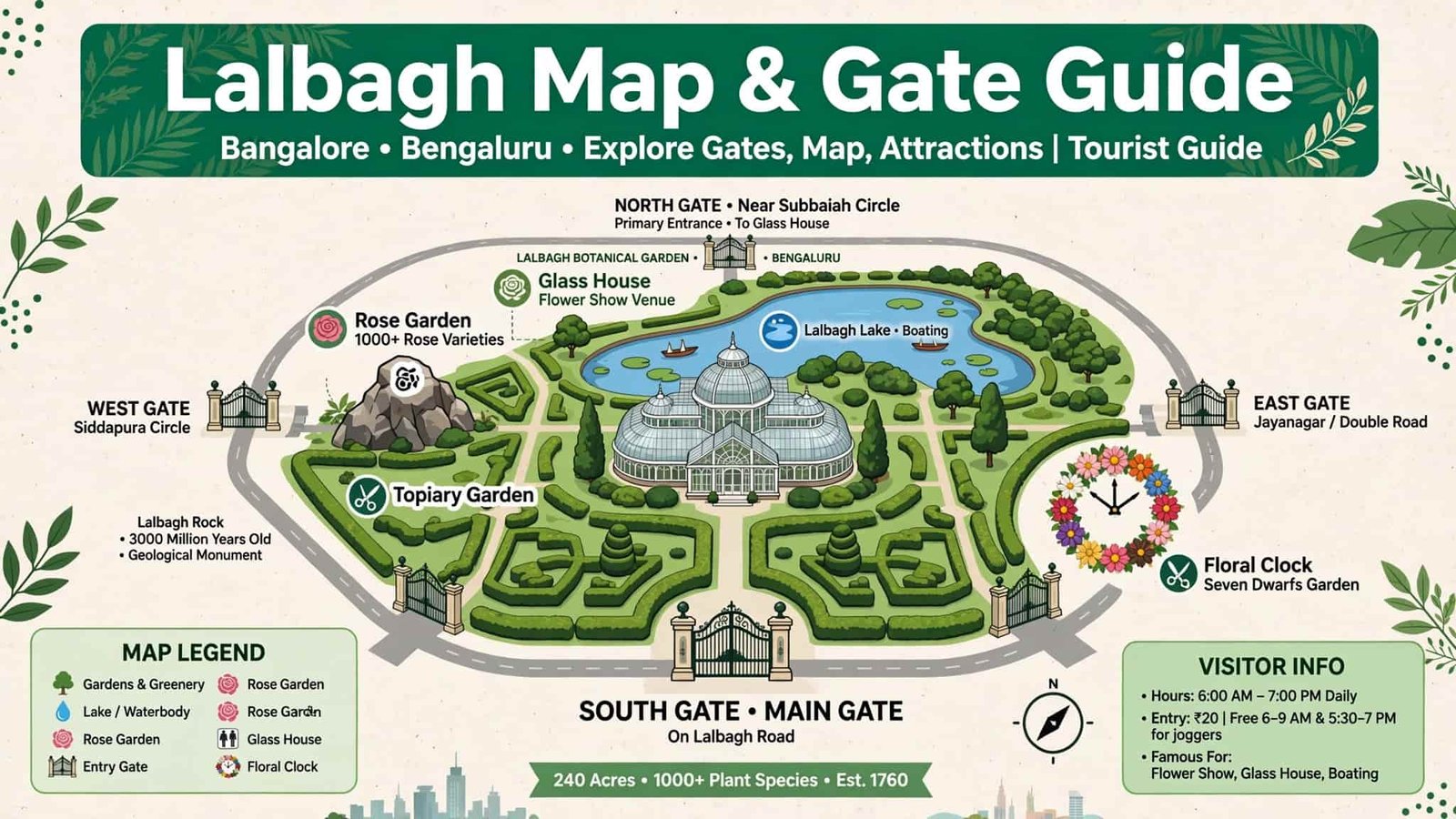
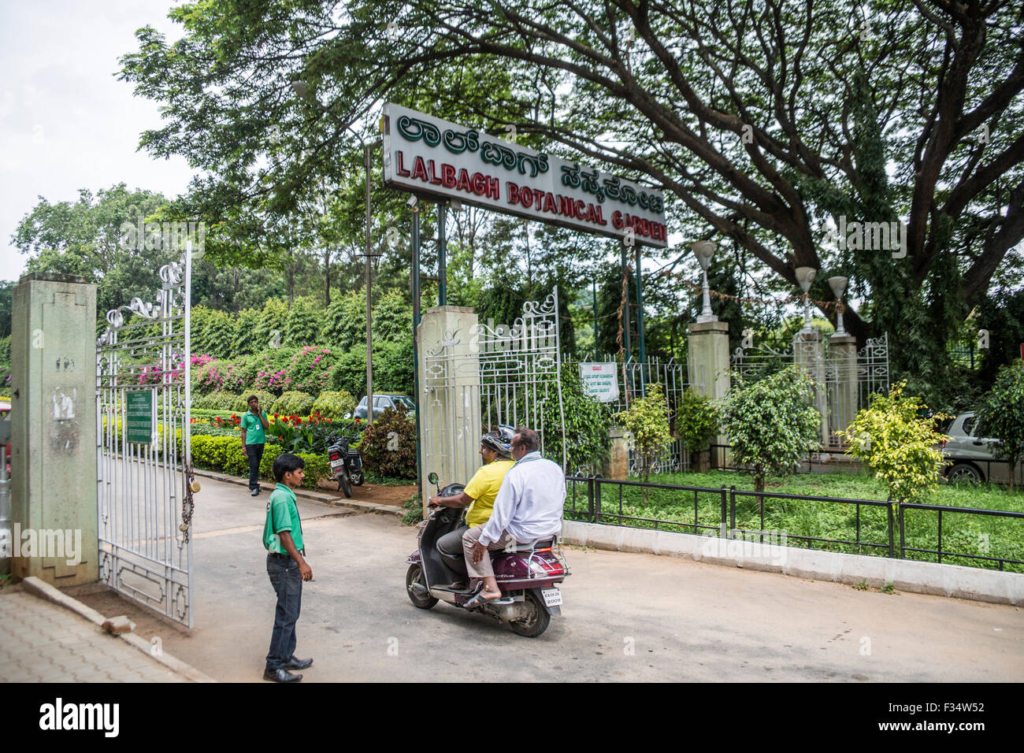
Lalbagh spans roughly 240 acres, and unlike a single-entrance monument, it has four separate gates positioned at each compass direction. Which one you enter through genuinely changes your visit — it decides what you see first, how close you park, and how you’ll naturally loop through the garden. Here’s a gate-by-gate breakdown.
North Gate — The Main Entrance
The North Gate is considered Lalbagh’s primary entrance, and it’s the one most first-time visitors default to. Enter here and you’re on a direct, well-signed path toward the Glass House — Lalbagh’s most photographed structure, modelled loosely on London’s Crystal Palace. From the North Gate, a natural walking loop takes you past the Japanese-influenced Bonsai Garden, a stretch of bougainvillea, one of the garden’s tallest Araucaria trees, and toward the floral clock near the exit.
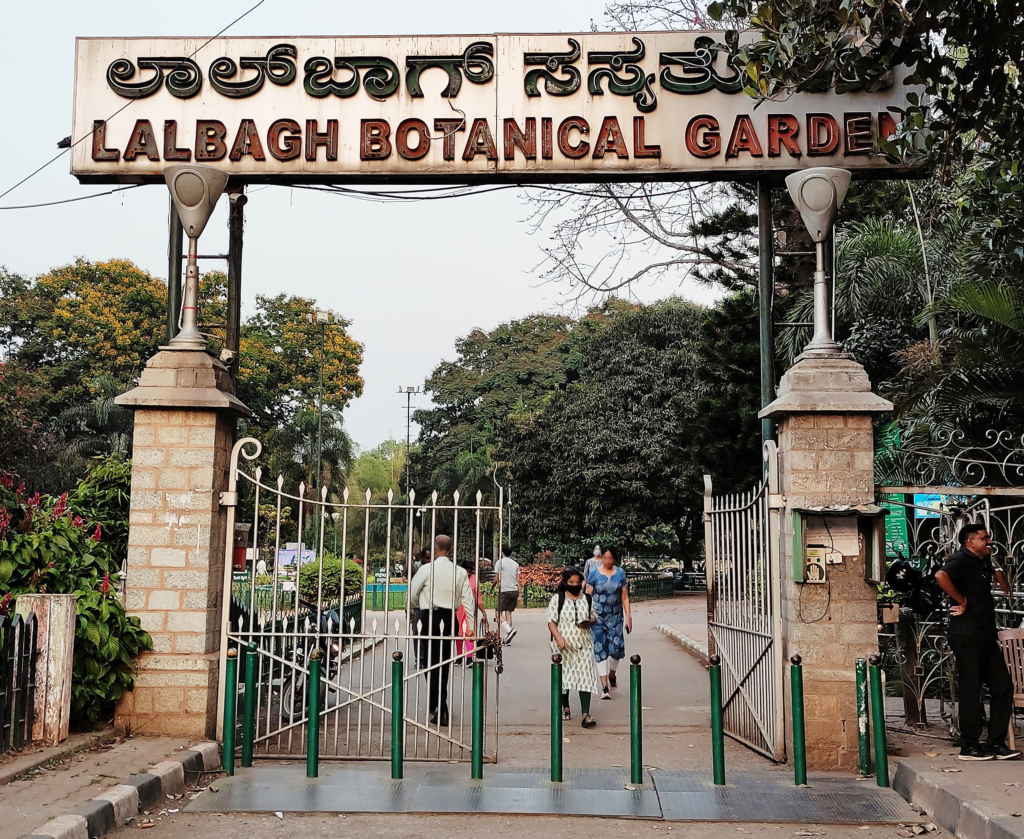
Best for: First-time visitors, anyone prioritizing the Glass House and central attractions, visitors arriving by road toward the garden’s northern boundary.
Nearby landmarks: The North Gate area connects most directly toward Bangalore’s central business district side, making it a natural stop if you’re combining a Lalbagh visit with errands or sightseeing elsewhere in central Bengaluru.
West Gate — Closest to the Metro
If you’re arriving by Namma Metro, the West Gate is your most convenient option — it sits close to R.V. Road, a short walk from Lalbagh Metro Station on the Green Line. Entering from the West Gate puts you near Lalbagh Lake early in your visit, making it a good starting point if birdwatching or a lakeside walk is high on your list.
Best for: Metro travellers, visitors prioritizing the lake and morning walking paths.
Nearby landmarks: Close to Siddapura Circle, with straightforward connectivity toward Jayanagar for anyone extending their day beyond the garden.
East Gate — Near Siddapura Circle
The East Gate opens close to Siddapura Circle, with a broader approach road connecting toward the Jayanagar side of the city. This entrance tends to be the quietest of the four on an average day, making it a good option if you’re specifically trying to avoid the busier North Gate crowds, particularly on weekends.
Best for: Visitors coming from Jayanagar, anyone wanting a quieter entry point.
South Gate — The Smaller, Lesser-Used Entrance
Often described as the smallest of Lalbagh’s four gates, the South Gate opens near the Ashoka Pillar replica inside the garden. It’s the least-used entrance for general visitors but is convenient if you’re approaching from the southern side of the city and don’t mind a smaller, quieter entry point.
Best for: Visitors coming from the southern part of the city, those wanting the least crowded gate.
A Rough Mental Map
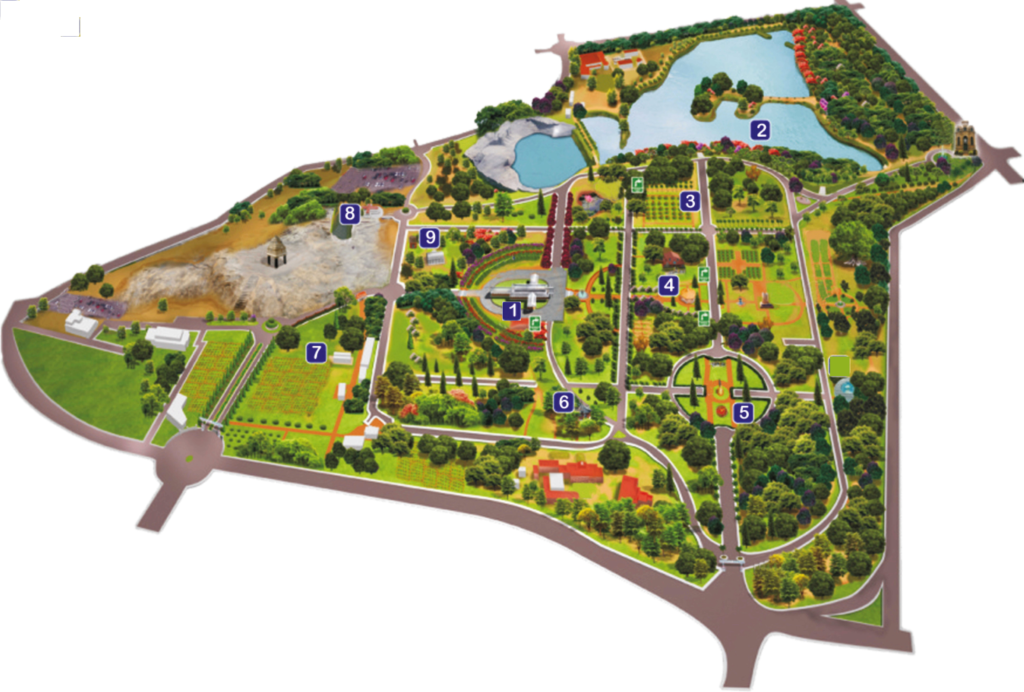
Picture Lalbagh as a large rectangle. The Glass House and most heritage structures sit closer to the northern half, the lake dominates the southern portion, the Kempegowda watchtower sits atop high ground roughly toward the garden’s rocky outcrop area, and the Bonsai and Rose Gardens are tucked along interior paths that any of the four gates will eventually connect to. In practice, most visitors end up covering a large portion of the garden regardless of which gate they start from — the paths are well-signed and loop back naturally.
How Far Apart Are the Gates, Really?
Given the garden’s 240-acre footprint, walking from one gate to the opposite one (say, North to South) along interior paths can take a fair amount of time — often closer to 30–40 minutes at an unhurried pace, factoring in stops along the way. This is worth keeping in mind if you’re planning to enter from one gate and exit from another closer to a specific onward destination; it’s entirely possible, but it means budgeting more time than a quick in-and-out visit.
A Suggested First-Timer’s Loop
If you’re visiting for the first time and want to see the highlights without overplanning, entering via the North Gate and looping counter-clockwise — Glass House, Bonsai Garden, floral clock, then cutting across toward the lake, and exiting via the West Gate near the metro — covers most of what people come to Lalbagh for in a single, logically connected walk of roughly two to three hours at a relaxed pace.
One Timing Note
Gates typically stop admitting new visitors shortly before the official 7 PM closing time, even though the posted closing time is 7 PM sharp. If you’re arriving late in the day, it’s worth aiming to reach a gate by around 6:30 PM to comfortably make it in before staff begin winding down entry for the day.
Which Gate Should You Actually Pick?
If this is your first visit and you don’t have a strong preference, the North Gate remains the safest default — it’s the most signed, leads directly to the garden’s best-known landmark, and has the most straightforward layout for newcomers. If you’re coming by metro, the West Gate saves you a longer walk. If you’ve been before and want a quieter, less touristy start to your visit, the East or South Gates are worth trying.
Also See: Lalbagh Rules and Restrictions Every Visitor Should Know

Suresh Kumar is the founder and editor of LalbaghBotanicalGarden.com, a website dedicated to helping visitors plan their trips to Lalbagh Botanical Garden with accurate, well-researched information on timings, fees, history, and attractions. Content is compiled and fact-checked using official sources and government tourism records.
Email: lalbaghgardenbangalore@gmail.com