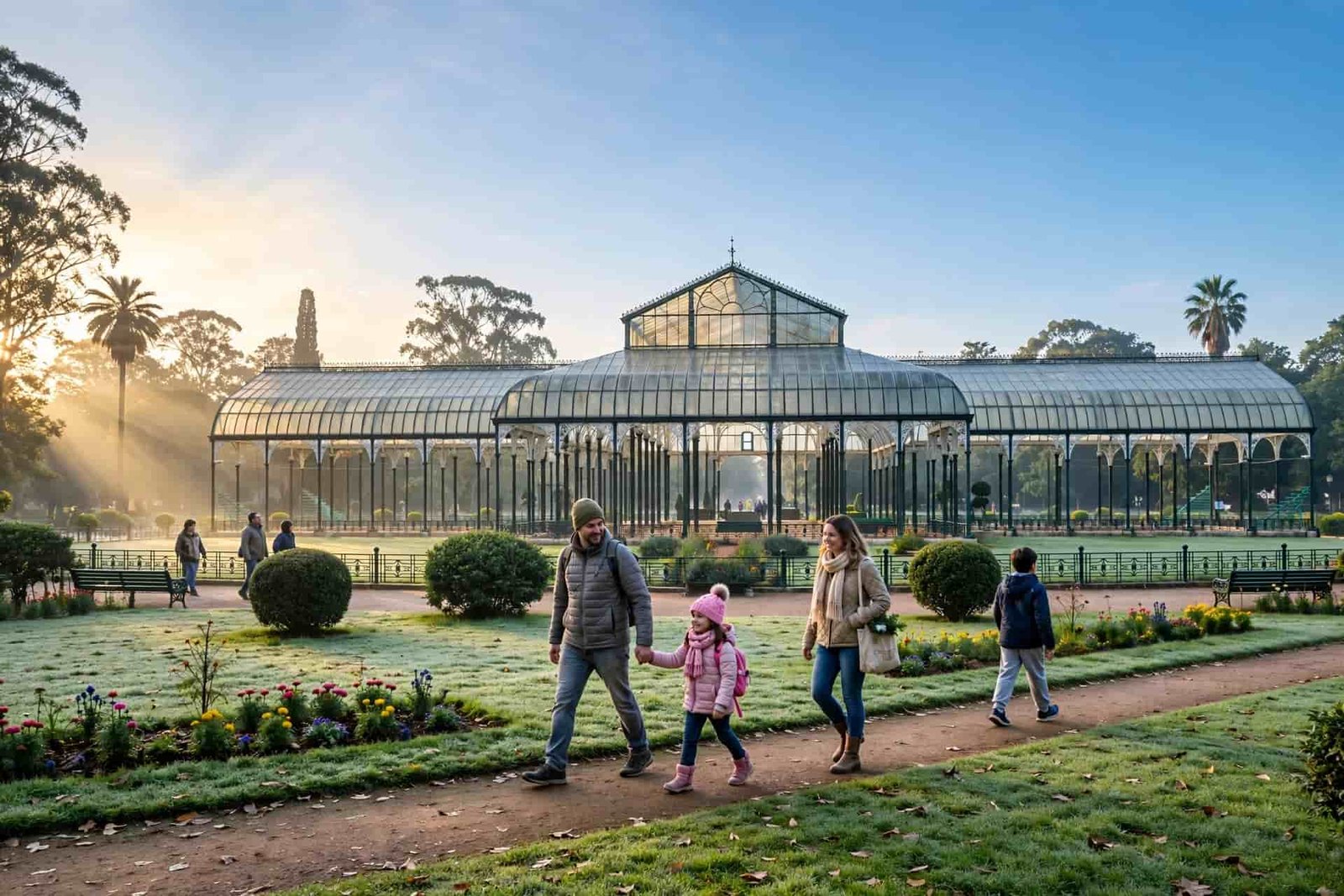
The best time to visit Lalbagh depends on what you actually want from the visit.
If you’re going mainly for a comfortable walk, December to February is hard to beat. If flowers and the famous Glass House displays are the priority, plan around the January or August flower show. And if you simply want to sit under the trees, walk without sweating and take a few good photographs, a normal weekday morning can be better than any special-event day.
I’ve found that Lalbagh feels quite different through the year. In the cooler months, you can walk around for hours without thinking much about the weather. By April and May, the timing of the visit matters much more. During the monsoon, some parts become wonderfully green, but a sudden shower can also change your plans in ten minutes.
So rather than saying “visit Lalbagh in winter” and leaving it there, here’s what each season is actually like and when I’d choose to go.
Quick Answer
For most visitors:
- Best overall months: December, January and February
- Best for a quiet garden visit: November to February on a weekday morning
- Best for the Republic Day Flower Show: January
- Best for the Independence Day Flower Show: August
- Best for greenery: July to September
- Best for photography: Winter mornings and flower-show mornings
- Best for families: December to February, preferably before 10 AM
- Best time of day: Around 6:30 AM to 9 AM
- Months when heat matters most: March to May
- Months when rain matters most: June to September
One useful thing to know before planning: Lalbagh currently has free walking hours from 6 AM to 9 AM and 6 PM to 7 PM, while general daytime entry is ticketed. Karnataka Tourism lists the current adult entry fee as ₹30 (always confirm at the gate or official site, as rates can change). Flower-show days have separate timings and higher ticket prices.
December to February: The Easiest Time to Enjoy Lalbagh

If a friend visiting Bengaluru asked me, “When should I go to Lalbagh if I don’t have any particular reason?”, I’d probably say December, January or February.
The weather is simply easier. You can start walking in the morning with a light layer, and after an hour you are still comfortable. The paths under the larger trees stay pleasant, while the open areas get enough winter sunlight for photographs without the harshness you get later in the year.
December
December is particularly nice for a relaxed visit. The garden doesn’t have the huge January flower-show crowds yet, so you can actually stop and look at things instead of constantly moving around other visitors. The Glass House is still worth seeing, but you don’t have to treat it as the entire purpose of your visit.
I would reach around 7 AM, walk towards the Glass House, spend some time around the flower beds and then deliberately take the less direct paths through the garden. That’s when Lalbagh starts feeling less like a tourist attraction and more like a huge city garden.
- Crowds: Usually manageable, especially on weekdays
- Weather: Comfortable mornings and pleasant walking conditions
- Best for: First-time visitors, families, photography and long walks
January
January is different because the Republic Day Flower Show takes over the garden for part of the month. The 2026 Republic Day show ran from 14 to 26 January, with the Glass House converted into a themed floral exhibition under the theme “Tejaswi-Vismaya”, dedicated to Kannada writer and environmentalist K.P. Poornachandra Tejaswi.
During the flower show, Lalbagh is much busier than it is on a normal January morning. If you’re going specifically for the show, don’t make the mistake of thinking that “January morning” automatically means quiet. The show itself attracts a huge number of people.
For a normal garden visit, I’d choose a January morning outside the flower-show dates. For the flower show, I’d choose a weekday as close to opening time as possible.
February
February is one of the best compromises. The January event is over, the weather is still comfortable, and you can explore the garden without having to work around an exhibition crowd. This is also a good month for someone who likes photography but doesn’t necessarily want photographs dominated by the flower-show structures.
My choice: A weekday around 7–8 AM.
March to May: Good Garden, Wrong Time of Day
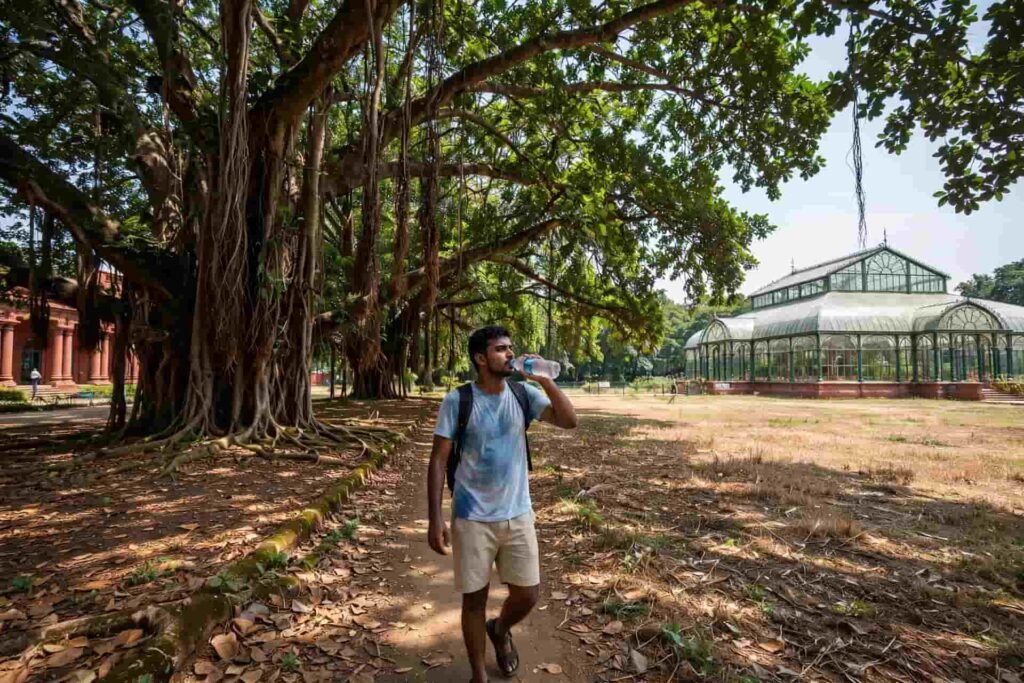
The garden doesn’t suddenly become unpleasant in March. The mistake is visiting it at the wrong hour.
By March, you can feel the difference between morning and midday. A walk at 7:30 AM is one thing; trying to cover the same distance at 1 PM is another. The large trees provide shade, which helps enormously, but Lalbagh has open lawns and exposed sections too.
March
March is still fairly easy if you start early. I’d avoid arriving after 11 AM if you’re planning to spend two or three hours walking. The flowers and greenery are still worth photographing, but strong sunlight becomes more noticeable.
Best time: 6:30–9 AM or later in the evening.
April
April is where I become much more particular about timing. If you’re staying near Lalbagh and can get there early, go for it. If your plan is to arrive around lunchtime after sightseeing elsewhere in Bengaluru, I’d honestly move Lalbagh to another day. The garden’s shade saves the experience, but you don’t want to spend your visit repeatedly looking for shade.
Best for: Early morning walks.
Less suitable for: Long afternoon visits, especially with small children or elderly family members.
May
May can be hot enough that the difference between a morning and afternoon visit is obvious. This is one of the months when I’d keep the visit shorter unless you’re particularly interested in plants and don’t mind the heat. A 6:30 or 7 AM entry gives you a much better experience than turning up at noon. Carry water, wear proper walking shoes and don’t forget that you may cover considerably more ground than expected once you’re inside.
June to September: The Greenest Version of Lalbagh
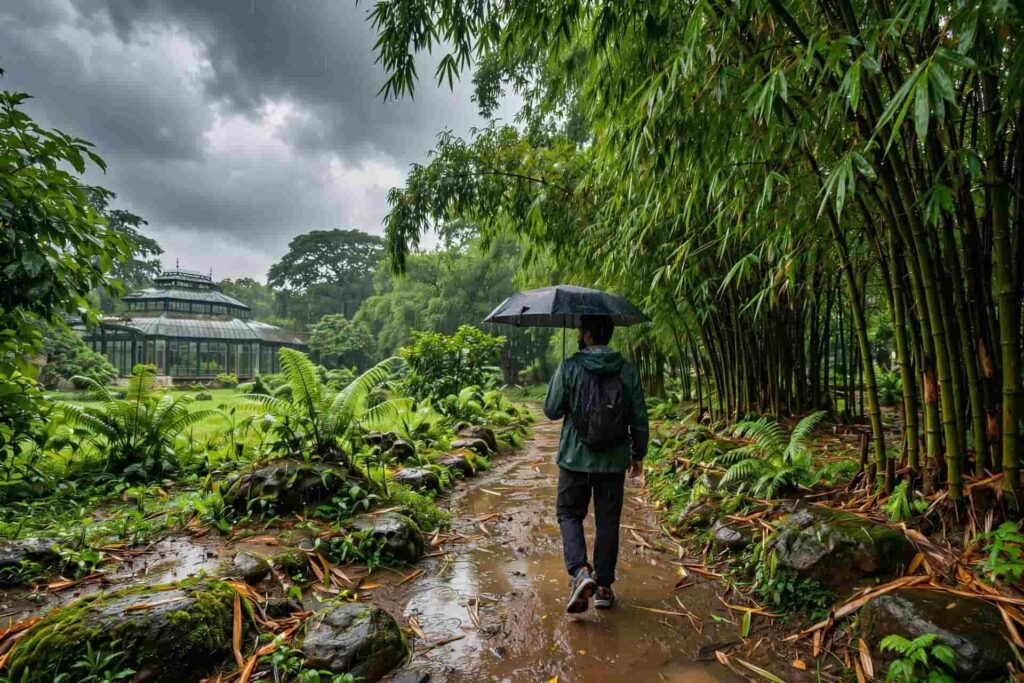
Monsoon is when Lalbagh gets a different personality. The greenery becomes the main attraction. Leaves look cleaner after rain, shaded areas become deeper green, and the garden can photograph beautifully under cloudy skies.
But there’s a trade-off. Rain doesn’t ask whether you’ve finished your photography. A bright morning can turn into a shower, and paths that were perfectly comfortable half an hour earlier can become wet and slippery.
June
June is a transition month. Some days feel quite warm and humid, while others are dominated by rain clouds. If you’re visiting during this period, I’d check the weather before leaving rather than assuming the entire day will be rainy. A small umbrella is worth carrying.
July
July is one of the better months for someone who specifically likes greenery. After a good shower, the garden can look fantastic. The bamboo areas and mature trees are especially nice when everything around them is wet and green. The downside is footwear — don’t wear smooth-soled sandals or anything you wouldn’t trust on a damp stone path. You don’t need trekking shoes, but decent grip is useful.
Best for: Greenery and monsoon photography.
Crowds: Usually much easier than flower-show periods.
August
August is complicated because the weather is monsoon-like, but the Independence Day Flower Show brings a massive increase in visitors. The 2026 Independence Day show is being held from 6 to 17 August, with timings generally 7 AM to 7 PM. This year’s display is themed around the Western Ganga dynasty (also referred to as the Glory of the Ganga Empire), featuring large floral and historical installations inside the Glass House.
So there are really two different August experiences:
- Normal August day: Green, occasionally wet and comparatively relaxed.
- Flower-show August: Colourful, busy and much more event-like.
If you’re visiting for the 2026 show, I would go as early as possible. If you’re simply visiting Lalbagh for a peaceful walk, choose a date outside the show period.
September
September can be a very good middle ground. You may still get rain, but once the August event is over, the garden settles down again. The greenery left behind by the monsoon can make this a surprisingly attractive month. It’s not the first month people usually mention when talking about the best time to visit Lalbagh Botanical Garden, but I wouldn’t dismiss it.
October and November: The Quiet Transition
October and November are useful months if you want comfortable weather without deliberately planning around the two flower shows.
October
October can still bring occasional rain, but the weather generally becomes easier for outdoor sightseeing. It’s a good time for families and visitors who don’t want to deal with January or August event crowds.
November
November is one of my favourite choices for a straightforward Lalbagh visit. The weather is becoming comfortable, mornings are pleasant and there is no major flower-show rush. If you’re interested in photographing the garden itself rather than a temporary floral installation, November is worth considering.
When Is the Lalbagh Flower Show?
Lalbagh traditionally hosts two major flower shows each year:
- Republic Day Flower Show – January
- Independence Day Flower Show – August
The exact dates and timings vary by edition, so don’t copy an old date from a previous year’s article. Always check the latest official announcement closer to the event.
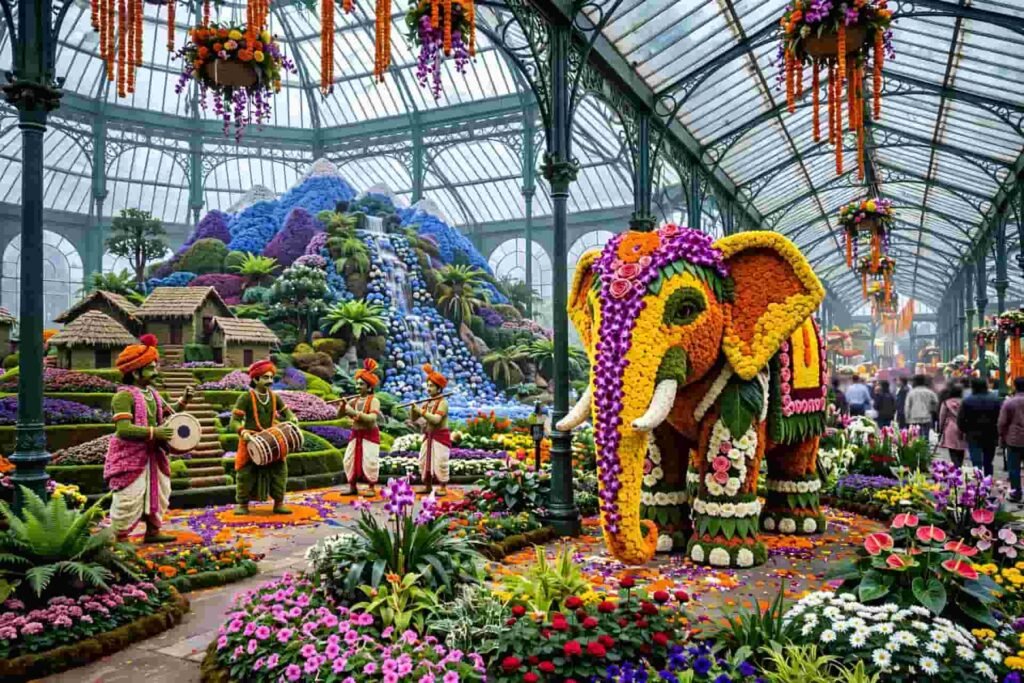
The 2026 January show ran from 14 to 26 January.
The August 2026 show runs from 6 to 17 August, with the event generally operating from 7 AM to 7 PM (timings can vary slightly, so confirm before you go).
The main thing to understand is that the flower show isn’t simply “Lalbagh with extra flowers.” The Glass House becomes the centre of a large temporary exhibition. There are themed structures, floral sculptures and displays made using huge quantities of flowers and plants. Recent editions have included historical, cultural and literary themes rather than just conventional flower arrangements.
What time should you reach for the flower show?
As close to opening as possible. This isn’t just about getting a parking spot. The Glass House is much easier to photograph before the main flow of visitors builds up. Later in the morning, people naturally gather around the most recognisable displays, and getting a clean photograph becomes much harder. If you’re going with children, an early visit also means you can see the main displays before everyone gets tired.
Morning vs Evening: Which Is Better?
For a proper sightseeing visit, I prefer morning by a clear margin.
Lalbagh currently allows free morning walking from 6 AM to 9 AM and free evening walking from 6 PM to 7 PM. General daytime entry is ticketed.
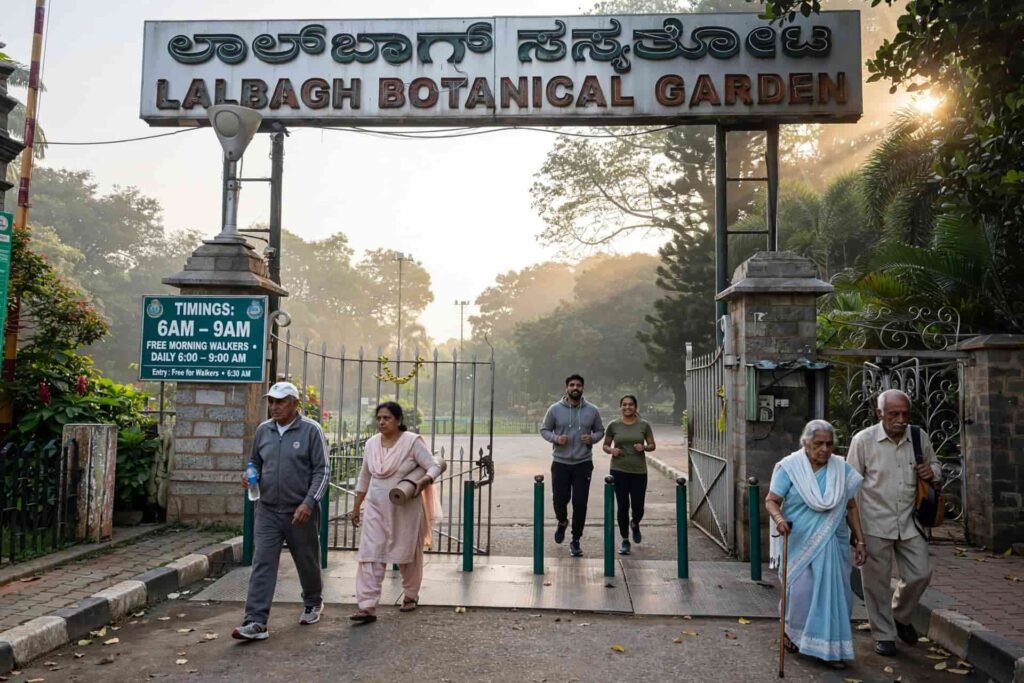
Morning
A 6:30–8:30 AM visit gives you:
- Cooler air
- Softer sunlight
- Better conditions for walking
- Better photography
- Less crowding on ordinary days
- More time to explore before the day gets busy
There’s also a small psychological advantage: you’re not constantly thinking about how hot it is.
Evening
Evening is good for people who live nearby and simply want a walk. The light becomes softer and the temperature drops, but the available window is shorter. If you’re a tourist and want to explore the garden properly, I’d rather start early than squeeze everything into the evening.
Weekday or Weekend?
If you have a choice, weekday morning wins. Tuesday, Wednesday and Thursday mornings are particularly good bets for a quieter experience.
Weekends bring families, walkers, photographers and tourists. That’s not necessarily a problem — Lalbagh is big enough to absorb plenty of people. But the difference is obvious around popular areas. During the flower show, the weekday/weekend difference becomes even more important. And public holidays are usually the days I’d avoid if crowds aren’t your thing.
Where Should You Enter Lalbagh?
The West Gate near Lalbagh Metro Station is the obvious choice if you’re coming by Namma Metro. The Green Line station is right by the garden, making it particularly convenient during busy flower-show periods. Karnataka Tourism specifically recommends the metro as a convenient option during the flower show.
If you’re driving, your preferred gate may depend more on where you are coming from and where parking is available that day. I wouldn’t choose a gate just because someone calls it the “best gate”. Lalbagh is large, and the most convenient entrance is usually the one that saves you unnecessary road travel or walking.
Parking: Don’t Treat a Flower Show Like a Normal Lalbagh Visit
On an ordinary weekday, parking is one thing. During the flower show, it’s another. Traffic restrictions and parking arrangements can change during major events. During the 2026 shows, authorities have pointed visitors towards public transport and mentioned limited parking arrangements in surrounding areas.
So if you’re visiting during the January or August flower show, my practical choice would be metro rather than car. For a normal visit, you have more flexibility, but I still wouldn’t build the entire plan around getting a parking spot immediately outside the gate.
Entry Fee and Timings
As of the latest Karnataka Tourism information, Lalbagh operates every day, including Sundays and public holidays.
Current listed timings are:
| Visit type | Timing | Entry |
|---|---|---|
| Morning walking | 6 AM–9 AM | Free |
| General visitors | 9 AM–6 PM | ₹30 for adults* |
| Evening walking | 6 PM–7 PM | Free |
| Flower-show days | Event-specific | Special ticket |
*Always check the current rate at the gate or official horticulture/Karnataka Tourism sources, as fees can be revised.
Flower-show pricing is considerably higher than normal garden entry. For the recent shows, adults paid ₹80 on regular days and ₹100 on weekends/holidays, while children aged 6–12 were charged ₹30. School children in uniform are usually free. For any future visit, check the current event notice rather than assuming the same price will apply.
What I Would Carry
I wouldn’t overpack for Lalbagh.

For a normal morning:
- Water bottle
- Comfortable walking shoes
- Sunglasses
- Cap if you’re visiting later in the morning
- Phone/camera
- Small umbrella during monsoon
- Light rain jacket if showers are forecast
Good footwear matters more than people expect. You may enter thinking you’ll walk for 45 minutes and then end up spending two hours wandering around. Lalbagh is one of those places where your route keeps getting extended because you spot another path, another large tree or another section worth exploring.
During flower-show periods, also remember that Lalbagh has restrictions on single-use plastic.
Food After Lalbagh: Keep Breakfast Outside
I wouldn’t plan a big meal inside the garden. A better plan is to finish your visit and eat around the surrounding Mavalli/Basavanagudi area. This works particularly well if you’ve gone early. You can enter Lalbagh around 7 AM, walk for two hours and then have breakfast nearby while the city is properly waking up. That’s honestly a much nicer combination than arriving at Lalbagh at 11 AM hungry, walking in the heat and then wondering where to eat.
A Few Things Regular Visitors Learn
The Glass House isn’t the whole visit
It’s the part most people recognise from photographs, but don’t walk out after seeing it. The larger trees, quieter paths and less obvious corners are where you get a better feeling for the garden itself.
Don’t walk the most obvious route
If you always follow the busiest path, you’ll spend most of the visit around other visitors. Once you’ve seen the Glass House, deliberately take a quieter route.
After rain, slow down
Wet stone and paved sections can be slippery. Also, puddles can hide uneven patches. A monsoon visit is enjoyable when you aren’t rushing.
Winter morning light is worth getting up for
If you’re carrying a proper camera or simply like taking phone photographs, the early winter light is much easier to work with than bright afternoon sunlight. The leaves and flowers don’t look washed out, and the large trees create natural shadows.
Don’t underestimate the distance
This is particularly relevant for families with older parents. Lalbagh is large enough that “we’ll just walk over there” can turn into another 15–20 minutes surprisingly quickly. If someone in your group doesn’t want to walk continuously, plan pauses instead of trying to cover everything.
When I Would Avoid Lalbagh
I wouldn’t completely rule out any month, but I would avoid a few combinations:
- Hot afternoon + long walking plan: Not worth it when you can visit early.
- Public holiday + flower show + car: Expect traffic and crowds.
- Heavy rain + slippery footwear: Easy one to avoid.
- Sunday afternoon during the flower show: Fine if you enjoy crowds; poor choice if you want relaxed photography.
The garden itself isn’t the problem in these cases. The timing is.
Best Time for Different Types of Visitors
| Your purpose | Best time |
|---|---|
| First-time visit | December–February morning |
| Peaceful walk | Weekday morning |
| Flower Show | January or August, near opening |
| Photography | Winter morning |
| Family visit | December–February, before 10 AM |
| Greenery | July–September |
| Avoiding heat | November–February morning |
| Avoiding crowds | Weekday outside flower-show periods |
| Short evening walk | 6–7 PM |
| Budget visit | 6–9 AM or 6–7 PM |
Final Recommendation
If you’re visiting Lalbagh for the first time and don’t have a specific event in mind, go between December and February, preferably on a weekday morning. I’d aim for around 7 AM rather than 10 or 11. Start with the Glass House, but don’t finish your visit there. Walk through some of the quieter sections, spend time under the older trees and keep at least two hours free.
If flowers are the main reason you’re coming, choose the January or August flower show, but change your expectations. You’ll see Lalbagh at its most elaborate and colourful, but you won’t get the quiet atmosphere of an ordinary morning.
And if you happen to be in Bengaluru during the monsoon, don’t automatically skip Lalbagh because rain is forecast. A light rainy morning can actually be one of the prettiest times to walk around the garden. Just carry an umbrella and wear shoes that can handle wet paths.
For me, the simplest answer to “What is the best time to visit Lalbagh Botanical Garden?” is still a winter weekday morning. It gives you the most comfortable weather, good natural light, fewer crowds and enough time to explore without constantly checking the clock.
The flower shows are worth seeing once. But Lalbagh on an ordinary quiet morning is a different experience altogether — and, if you actually enjoy gardens, arguably the better one.

Chavi Devi is the founder and author of Lalbagh Botanical Garden. Based in Bengaluru, she has been documenting Lalbagh for the last 2 years – from ticket prices and timings to hidden rules and photography permissions. She visits the garden regularly to verify information and creates simple, practical guides for first-time visitors.
Read More About Chavi→ About Us