Walk past the Glass House in Lalbagh and take the left mud track that goes towards the nursery. After a two-minute walk, the crowd noise just disappears.
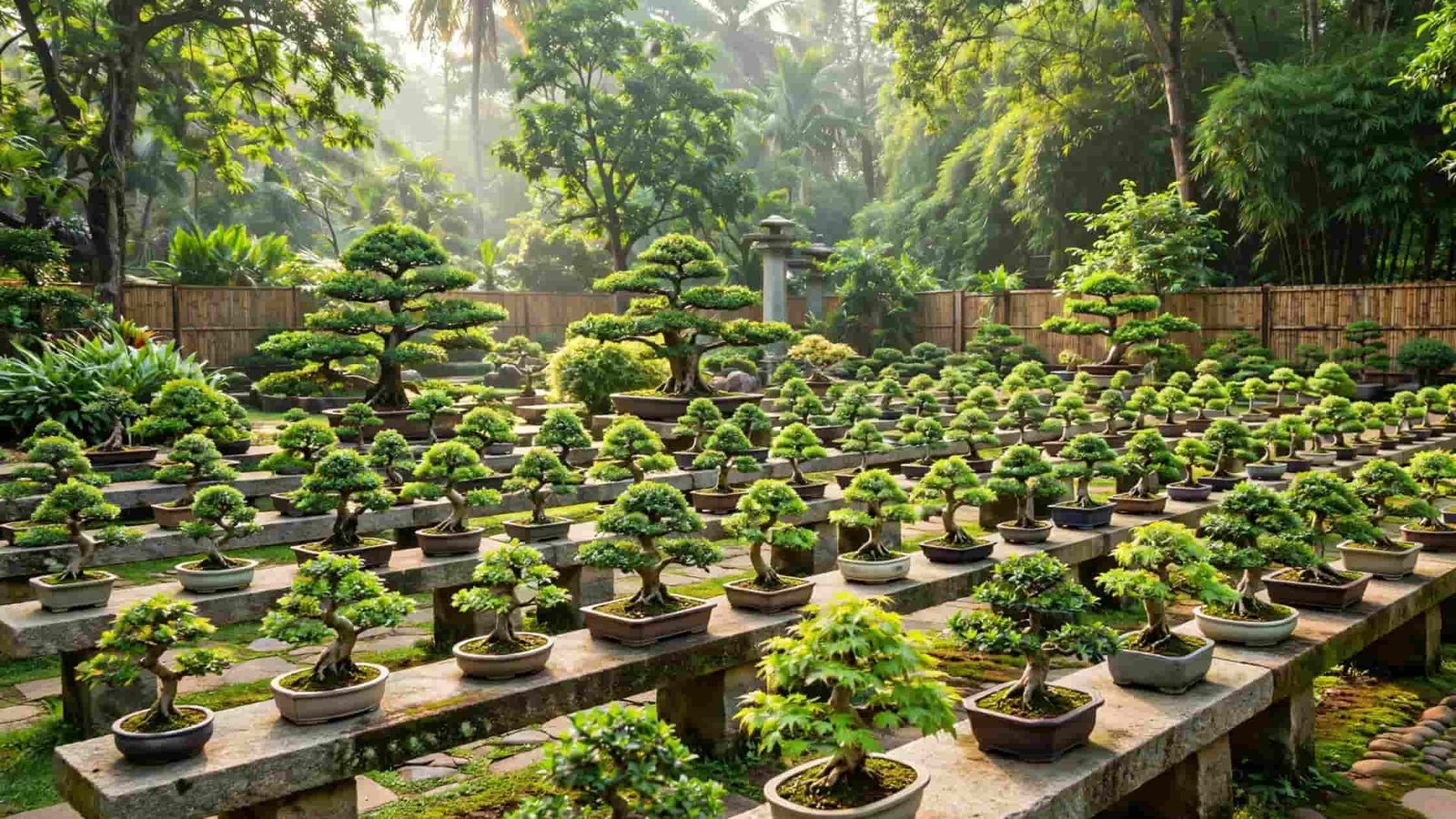
In front of you will be rows of small pots, but inside those pots are trees that are 40, 60 and even 90 years old. A full Banyan tree with aerial roots, a Guava tree with real fruits, all growing in a pot that you can lift with one hand.
This is the Bonsai Garden of Lalbagh. It is inside the main garden but most people never reach here because it has a separate timing and a slightly hidden entry.
History of Lalbagh Bonsai Garden
The Bonsai Garden at Lalbagh was not built in a day. The credit for developing this section goes to the Horticulture Department of Karnataka and renowned bonsai artist Shri B. N. Prasanna.
The collection started getting serious attention back in the 1980s. The idea was simple – to introduce the Japanese art of Bonsai to Indians and to show that you can preserve nature even with limited space.
Today, the garden holds more than 300 bonsai plants. Some of these plants were started in the 1950s and have been pruned and shaped for decades to achieve their current form. Each plant here is a result of 20-30 years of daily patience.
What You Will See Inside – The Collection
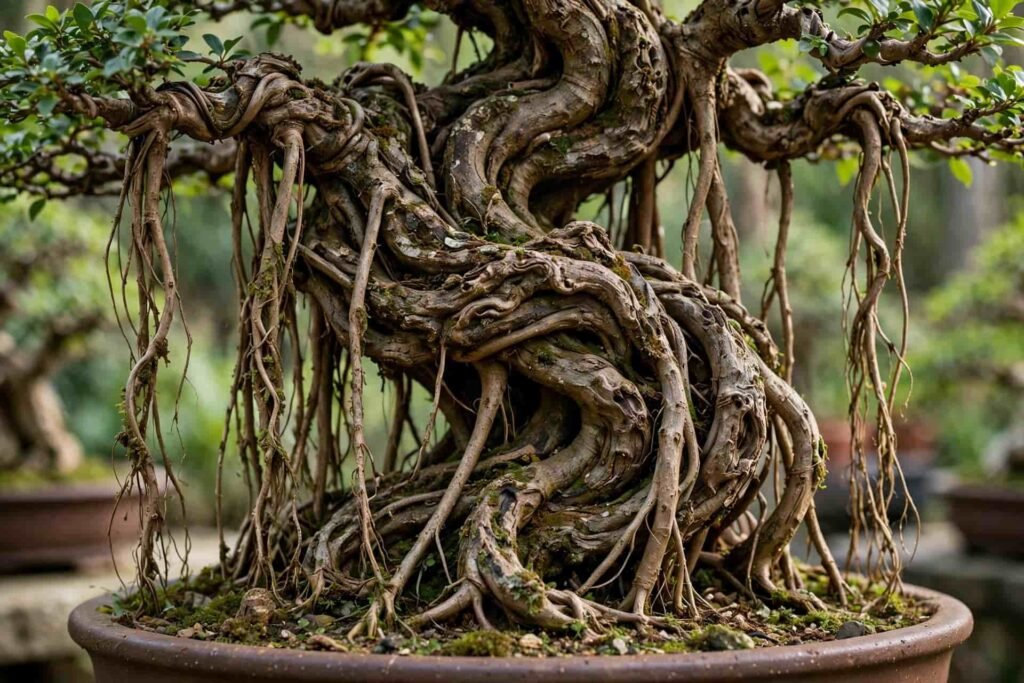
Don’t expect a colorful flower show here. The beauty of this garden is in its shapes, roots, and trunks. Every plant has a nameplate with its common name, botanical name, age, and bonsai style.
Here are the main types you will find:
1. Ficus Collection – The Largest Section
Almost 60% of the garden is Ficus. You will see Banyan, Peepal, Ficus Microcarpa, and Ficus Benjamina. Their aerial roots and twisted trunks are shaped in styles like Formal Upright, Informal Upright, and Root-Over-Rock.
2. Flowering Bonsai
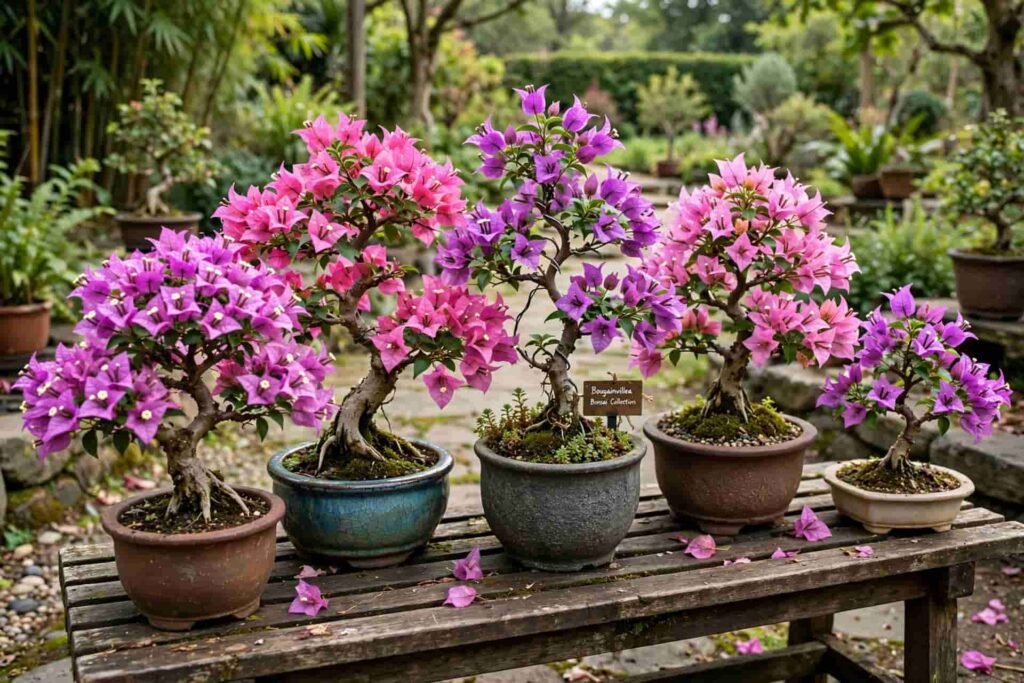
These are the most photogenic. Bougainvillea, Ixora, Adenium, and Jasmine are trained as bonsai. During October to January, Bougainvillea bonsais are in full bloom and look stunning.
3. Fruit Bonsai
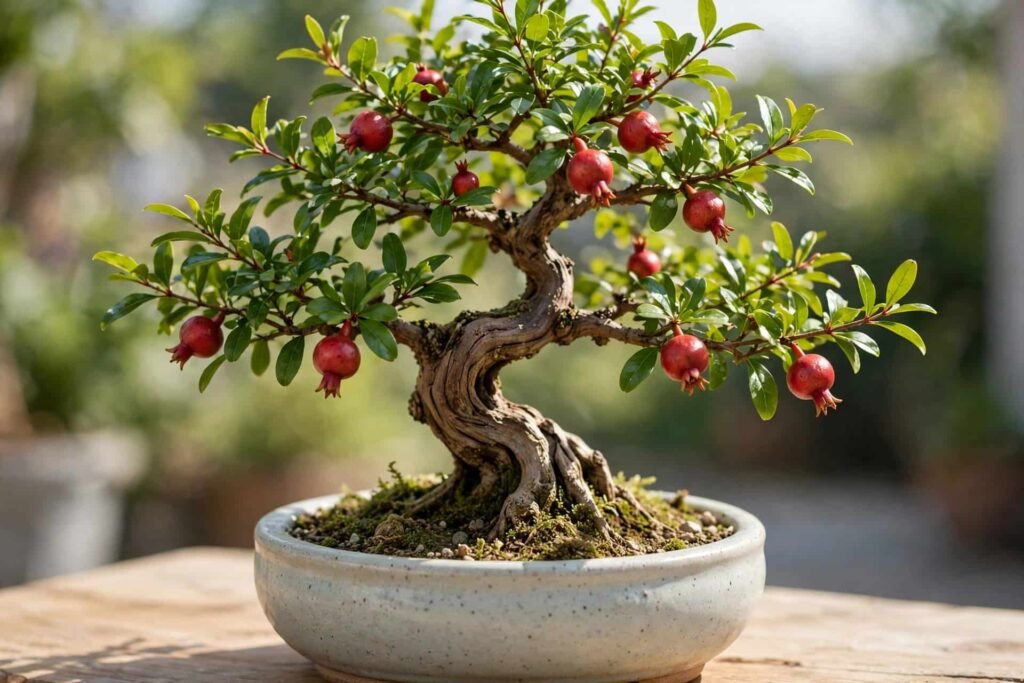
This is what surprises first-time visitors the most. You will see small Pomegranate, Guava, Mango, and Lemon trees with actual tiny fruits growing on them.
4. Rare and Exotic Species
The garden also preserves some rare species like Baobab, Chinese Elm, Malpighia, and Murraya. The Baobab bonsai is very rare to see in India.
Bonsai Garden Lalbagh – Ticket Price, Timings & Location [Updated 2026]
This is the most searched information, so here are the exact details.
| Detail | Information |
|---|---|
| Location | Inside Lalbagh Botanical Garden, Near Topiary Garden, Bangalore – 560004 |
| Bonsai Garden Timings | 6:00 AM to 9:00 AM and 6:00 PM to 7:00 PM |
| Lalbagh General Timings | 6:00 AM to 7:00 PM, All Days |
| Entry Ticket | Rs. 30 for Adults, Free for children below 12 years |
| Camera Fee | Rs. 60 for still camera |
| Best Time to Visit | October to February, Early Morning |
Location Details:
The Bonsai Garden is inside Lalbagh, near the Topiary Park and close to the West Gate. Once you enter from the main gate, don’t go towards the Glass House. Take the left path that goes towards the nursery. It is a 5-minute walk. Since it is a bit inside, it is better to ask a guard for “Bonsai Park”.
Timings:
Please note that the Bonsai Garden does NOT remain open all day. It is open only for two slots – morning 6 AM to 9 AM and evening 6 PM to 7 PM. It remains closed during the afternoon because harsh sunlight can damage the small plants. On Sundays, it gets crowded after 7:30 AM.
Ticket Price:
There is no separate ticket for the Bonsai Garden. You only need to buy the Lalbagh Botanical Garden entry ticket, which costs Rs. 30 per person.
Best Time to Visit
The best time is from October to February. The weather is cool, and the plants are at their freshest after the monsoon.
If you want to avoid the crowd and take good photos, reach by 6:30 AM. At that time, the light is soft, there is no crowd, and you can talk to the gardeners who are watering the plants. They will tell you stories about each tree that you won’t find on Google.
Avoid visiting during heavy monsoon. The pots get waterlogged and the area becomes slippery.
How to Reach Lalbagh Bonsai Garden
By Metro: Lalbagh is the nearest metro station on the Green Line. From there, it is a 10-minute auto ride to the West Gate.
By Bus: From Majestic, BMTC buses like 40, 44, 51, and 221 go directly to Lalbagh Main Gate.
By Car/Bike: You can park your vehicle at the West Gate parking area. Parking fee is Rs. 30 for bikes and Rs. 60 for cars.
3 Practical Tips for Your Visit
1. Talk to the Caretakers: The real information is not on the internet, but with the malis working there. They know the exact age of every plant and how it was shaped. Just ask them politely.
2. Don’t Rush: Don’t try to see it in 10 minutes. Give at least 45 minutes. Observe the roots and trunk of each bonsai. It teaches you patience.
3. Want to Buy a Bonsai?
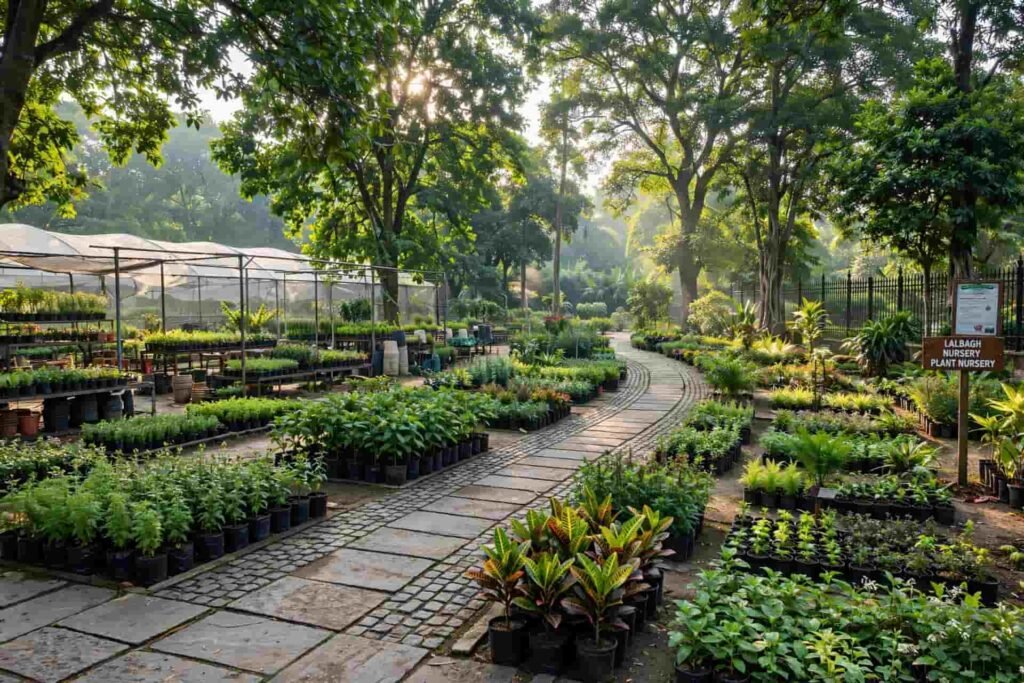
The plants inside the Bonsai Garden are not for sale. If you want to buy one, visit the Lalbagh Nursery right outside the Bonsai Garden. You can get a beginner-friendly Ficus bonsai for Rs. 300 to Rs. 800.
Places to Visit Near Bonsai Garden
Since you are already inside Lalbagh, you can also cover:
- Glass House: 2 minutes walk from Bonsai Garden
- Lalbagh Lake: Perfect for a peaceful evening
- Peninsular Gneiss Rock: A 3000 million-year-old rock formation, a geological monument.
- Topiary Garden: Right next to the Bonsai Garden
Frequently Asked Questions
Q1. Is photography allowed in Bonsai Garden Lalbagh?
Yes, mobile photography is allowed. For DSLR, you need to pay the camera fee of Rs. 60. Tripods and professional pre-wedding shoots require prior permission from the Horticulture Department.
Q2. Is it difficult to grow bonsai at home?
It needs patience, not expertise. Start with a Ficus variety. It needs 3-4 hours of morning sunlight and very little water daily. The gardeners at Lalbagh nursery can give you a 5-minute basic training for free.
Q3. How much time is needed to see the Bonsai Garden?
If you just want to see it quickly, 20 minutes is enough. If you want to observe and take photos properly, keep 45 minutes to 1 hour.
Final Words
The Bonsai Garden in Lalbagh is not a place for loud picnics. It is for those who appreciate slow art. In a city that is always in a hurry, this garden teaches you how beautiful things grow when you give them time. If you are in Bangalore, add it to your list, but go in the morning.
Read Also: Lalbagh Lake: A Complete Guide to the Lake, Birds, Views & Best Time to Visit

Chavi Devi is the founder and author of Lalbagh Botanical Garden. Based in Bengaluru, she has been documenting Lalbagh for the last 2 years – from ticket prices and timings to hidden rules and photography permissions. She visits the garden regularly to verify information and creates simple, practical guides for first-time visitors.
Read More About Chavi→ About Us