




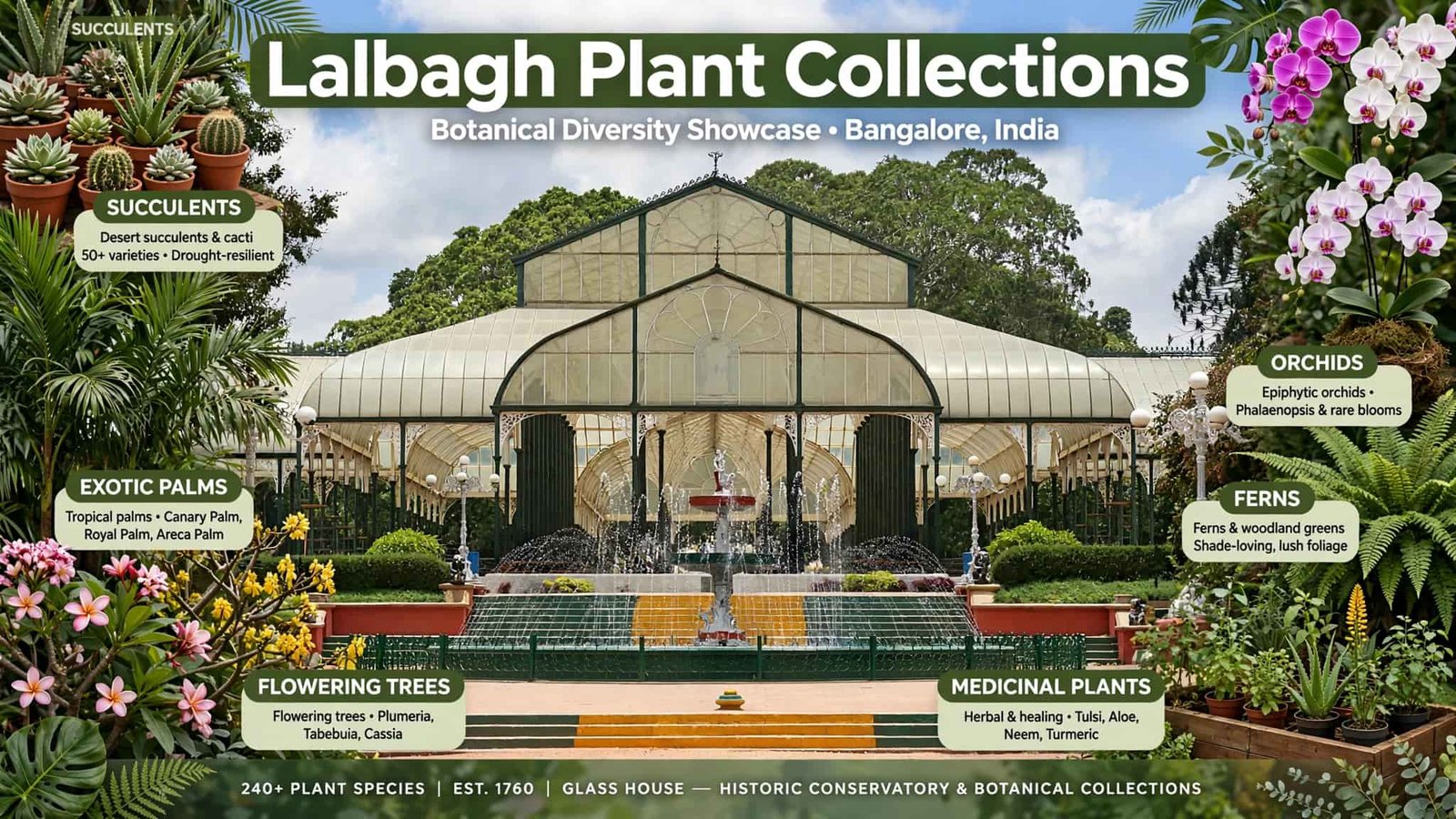
Lalbagh Botanical Garden in Bengaluru is much more than a landscaped city park. Spread across about 240 acres, it brings together flowering plants, ornamental displays, bonsai, heritage trees, tropical and subtropical vegetation, specialty gardens and seasonal horticultural exhibitions. Government tourism information describes Lalbagh as home to more than 1,800 species of rare plants and flowers, making its botanical diversity one of its major attractions.
For visitors interested in plants, Lalbagh can feel like several different gardens within one large landscape. Some areas emphasize particular plant groups, while others showcase plants through landscaping, seasonal displays or horticultural techniques.
This guide explores the plant collections and displays at Lalbagh, including its flowering gardens, bonsai collection, topiary, heritage trees, Glass House exhibitions and other botanical highlights.
What Kind of Plants Can You See at Lalbagh?
The vegetation at Lalbagh includes a mixture of ornamental flowers, mature trees, shrubs, palms, tropical and subtropical plants, bonsai and seasonal flowering displays.
Its botanical character developed over a long period. Lalbagh was established in the 18th century and later became an important centre for horticulture and the introduction and propagation of ornamental and economically useful plants.
Because of its size and variety, visitors can encounter very different types of vegetation during the same walk:
- Large heritage trees
- Flowering shrubs and beds
- Rose varieties
- Hibiscus plants
- Bonsai specimens
- Topiary plants
- Tropical and subtropical vegetation
- Seasonal flowering plants
- Plants displayed during horticultural shows
- Nursery plants and saplings
- Aquatic plants around water features
1. Flowering Plant Displays

One of the most noticeable parts of Lalbagh’s plant landscape is its collection of flowering plants.
Flower beds are used throughout the garden to introduce colour into lawns, pathways and landscaped sections. The exact flowers visible can change according to the season, which means the appearance of Lalbagh is not identical throughout the year.
During horticultural exhibitions, flowering plants become an even bigger attraction. The Glass House is transformed into a large exhibition space where flowers and plants are arranged according to a particular theme. The Ministry of Tourism notes that thousands of varieties of flowers can be displayed in different forms during the flower show.
This makes the flower displays different from Lalbagh’s permanent plant landscape: the regular garden provides year-round botanical variety, while exhibitions create temporary, themed displays.
2. Rose Garden

The Rose Garden is one of the areas visitors can explore when looking for flowering plants at Lalbagh.
Roses provide an opportunity to see differences in flower colour, form and growth habit within a single plant group. Depending on the season, the garden can provide a colourful contrast to Lalbagh’s large tree-filled areas.
For photography, morning visits can be particularly pleasant because the softer light makes it easier to capture flower colours without the harsh midday sunlight.
If your main interest is flowering plants, consider combining the Rose Garden with the Glass House and other landscaped flower beds rather than treating any single section as the complete collection.
3. Hibiscus Collection

Lalbagh also has a Hibiscus Garden, providing visitors with an opportunity to see different hibiscus plants and flowers.
Hibiscus is particularly interesting from a botanical perspective because cultivated varieties can differ considerably in flower colour, shape and appearance.
The Karnataka Tourism description of Lalbagh specifically lists the Hibiscus Garden among its attractions and describes it as a collection displaying different hibiscus varieties.
For visitors who normally see only a few common hibiscus varieties at home, this section can provide a useful introduction to the diversity within an ornamental plant group.
4. Bonsai Collection

The Bonsai Garden provides one of the most distinctive plant displays inside Lalbagh.
Unlike a conventional flower bed, bonsai focuses on the cultivation and shaping of trees in miniature form. Visitors can observe differences in trunk structure, branching patterns, foliage and the shapes created through years of horticultural care.
The Bonsai Garden is also visually different from the larger landscape of Lalbagh. Instead of towering trees and expansive lawns, the display allows visitors to examine individual plants at close range.
The Karnataka Tourism website lists the Bonsai Garden among Lalbagh’s notable attractions.

5. Topiary Plants and Shaped Greenery

Another interesting horticultural display is topiary, where plants are carefully pruned and trained into specific shapes.

Topiary demonstrates that botanical gardening is not only about collecting different species. It can also involve manipulating the growth and appearance of plants for landscape design.
At Lalbagh, shaped shrubs and greenery provide a different visual experience from natural-looking tree groups and flower beds.

For children and first-time visitors, topiary can also be an easy way to notice how horticultural techniques influence the form of a plant.
6. Tropical and Subtropical Plant Diversity

One of the important characteristics of Lalbagh is the mixture of plant types found across its large landscape.
The garden has historically been associated with the introduction and cultivation of plants from different regions. The Ministry of Tourism notes Lalbagh’s long role in introducing and propagating ornamental and economically useful plants.
This history helps explain why Lalbagh cannot be reduced to a collection of only native Bengaluru plants.
While walking through the garden, visitors encounter:
- Tropical trees
- Subtropical plants
- Ornamental shrubs
- Flowering plants
- Palms and other landscape plants
- Large mature trees
- Plants used for horticultural displays
The result is a landscape where plants with very different appearances grow within the same historic garden environment.
7. Heritage and Old Trees

Not all of Lalbagh’s botanical importance comes from small flowers or ornamental collections.
Some of its most impressive plants are large, mature trees that have become landmarks in their own right.
Government tourism information highlights Lalbagh’s centuries-old and very old trees, including the White Silk Cotton tree (Ceiba pentandra), described by Karnataka Tourism as around 250 years old.
These trees are important because they demonstrate another side of botanical diversity: age, size and ecological structure.
A mature tree can provide shade, habitat and a completely different visual experience from a formal flower garden.
For this reason, visitors interested in plants should not spend their entire visit around the Glass House. Walking the wider garden is necessary to appreciate its large trees and natural-looking vegetation.
8. Seasonal Plant Displays at the Glass House

The Glass House is the centrepiece of Lalbagh’s major horticultural exhibitions.
Built in the late 19th century, the structure is closely associated with Lalbagh’s flower shows. During these events, flowers and plants are arranged into large decorative installations, themed displays and horticultural exhibits.
The displays can include:
- Cut flowers
- Potted flowering plants
- Decorative plant arrangements
- Themed floral structures
- Large-scale horticultural installations
- Special exhibits
One important point is that these displays are seasonal rather than permanent collections. Therefore, someone visiting Lalbagh outside a flower show will experience a different plant display inside the Glass House.

The garden currently hosts major flower shows around the Republic Day and Independence Day periods.
9. Floral Clock and Landscape Displays

The Floral Clock is another example of plants being incorporated into landscape design.
Instead of presenting plants simply as a botanical collection, the area combines vegetation with a recognizable decorative feature.
It illustrates an important aspect of Lalbagh: some plants are displayed primarily for their botanical characteristics, while others are used to create visual designs and visitor attractions.
10. Lotus and Aquatic Plant Areas

Water features add another type of plant environment to Lalbagh.
The garden includes areas such as the Lalbagh Lake and lotus pond, creating conditions where aquatic and water-associated plants can become part of the landscape.
These areas also contribute to the garden’s wider ecosystem. The Ministry of Tourism notes that Lalbagh supports various bird species, showing that the garden’s value extends beyond ornamental horticulture.
For visitors interested in nature photography, water bodies can provide opportunities to photograph plants, birds and reflections together.
11. Nursery and Horticultural Plants
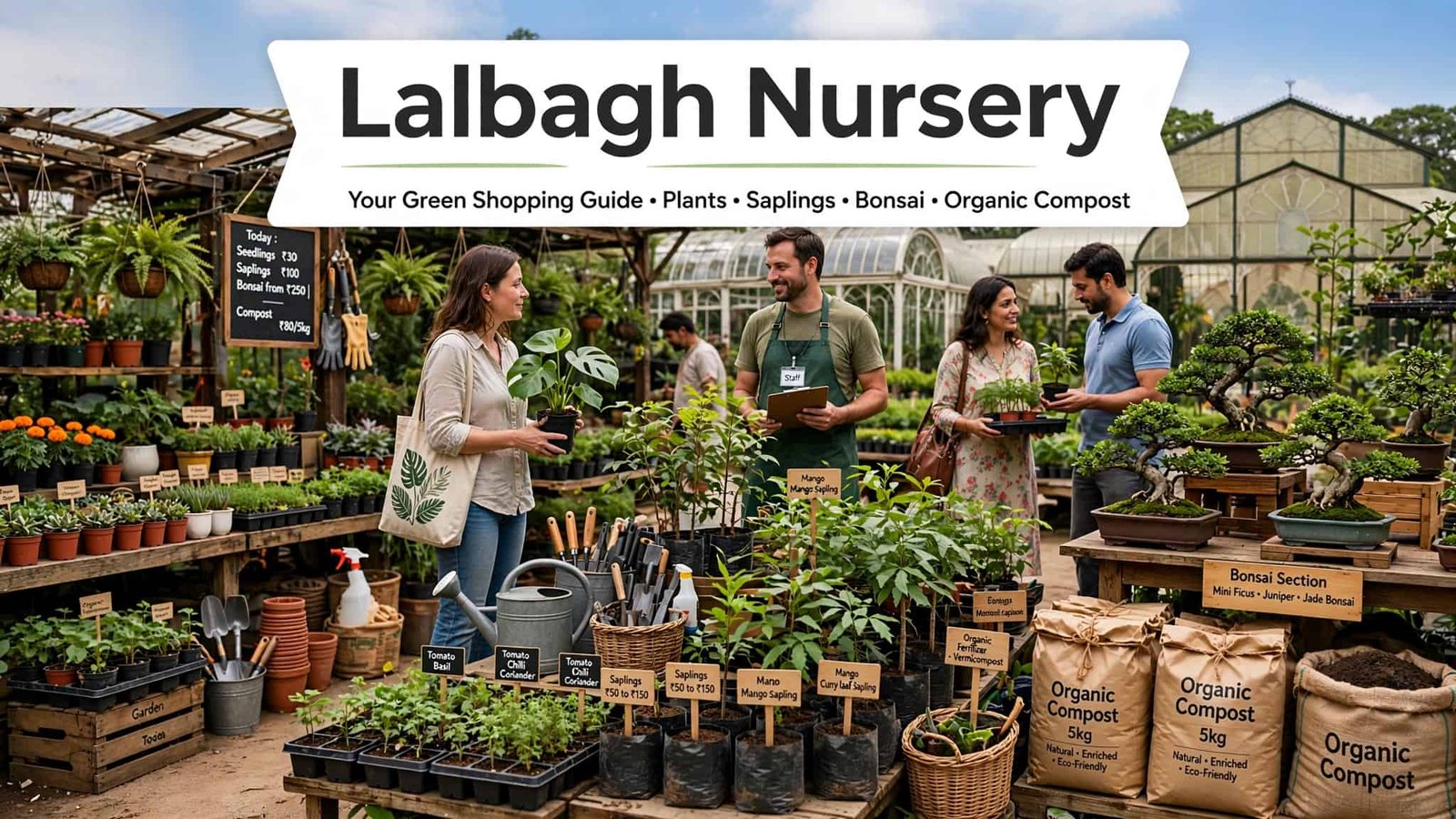
Lalbagh also has a nursery operated by the Department of Horticulture, where visitors can find plants, saplings, seeds and gardening-related supplies. Karnataka Tourism lists the nursery as one of the garden’s horticultural facilities.
This makes the nursery different from the ornamental collections around the garden.
Instead of simply observing plants, visitors can explore plants intended for cultivation at home or in other gardens.
For home gardeners, this can be one of the more practical parts of a Lalbagh visit.
Lalbagh Plant Collections at a Glance
| Plant collection or display | What you can see | Type of experience |
|---|---|---|
| Flower Beds | Seasonal flowering plants | Colourful landscape |
| Rose Garden | Rose varieties | Flower collection |
| Hibiscus Garden | Hibiscus varieties | Specialty collection |
| Bonsai Garden | Miniature trained trees | Horticultural art |
| Topiary | Shaped shrubs and plants | Landscape design |
| Heritage Trees | Large and old trees | Botanical and historical |
| Glass House | Seasonal flower exhibitions | Horticultural display |
| Floral Clock | Plants arranged as a clock | Decorative landscape |
| Lotus/Water Areas | Aquatic and water-associated plants | Nature and photography |
| Nursery | Plants, saplings and gardening material | Practical gardening |
Why Lalbagh’s Botanical Diversity Is Important
The significance of Lalbagh’s plant collections comes from their variety rather than a single spectacular species.
Within one large garden, visitors can move from an enormous heritage tree to a formal flower bed, then to a bonsai display, a specialty garden or a seasonal exhibition.
This combination provides several different ways of understanding plants:
Plant diversity — different species and cultivated varieties.
Horticultural diversity — different methods of growing, pruning and displaying plants.
Landscape diversity — lawns, tree-lined paths, specialty gardens, water areas and exhibition spaces.
Historical diversity — plants and horticultural traditions associated with the garden’s long development.
Government tourism sources describe Lalbagh as containing more than 1,800 species of rare plants and flowers, while its history includes the introduction and propagation of plants from different regions.
Best Way to Explore Lalbagh’s Plant Collections
If your main purpose is to see plants rather than simply take a quick walk, allow several hours for the garden.
A useful approach is:
- Start with the major landscaped areas and flowering beds.
- Visit the Glass House.
- Explore the Rose Garden and Hibiscus Garden.
- Continue toward the Bonsai Garden.
- Look for topiary and specialty displays.
- Spend time around the heritage trees.
- Walk near the lake and aquatic areas.
- Visit the nursery if you are interested in gardening.
Lalbagh is large enough that trying to see every plant collection quickly can make the visit feel rushed. A slower walk allows you to notice differences between formal horticultural displays and the garden’s mature tree landscape.
When Is the Best Time to See Lalbagh Plants?
The answer depends on what you want to see.
For general greenery: early morning is comfortable for walking and photography.
For flowering plants: seasonal timing matters because different plants bloom at different periods.
For large floral displays: plan your visit around the major flower shows held at the Glass House.
For heritage trees: these can be appreciated throughout the year because their appeal is based more on their size, age and structure than on seasonal flowering.
The Republic Day and Independence Day periods are particularly significant for Lalbagh’s major flower exhibitions.
Frequently Asked Questions
How many plant species are found in Lalbagh?
Government tourism information describes Lalbagh as having more than 1,800 species of rare plants and flowers.
Does Lalbagh have a bonsai collection?
Yes. Lalbagh has a dedicated Bonsai Garden featuring miniature trees and horticultural displays.
Does Lalbagh have a Rose Garden?
Yes. The Rose Garden is one of the specialty plant areas visitors can explore within Lalbagh.
Does Lalbagh have a Hibiscus Garden?
Yes. Lalbagh has a Hibiscus Garden featuring different hibiscus varieties.
Are the Glass House flower displays permanent?
No. The large floral exhibitions associated with the Glass House are seasonal events, so the displays can change from one exhibition to another.
Can I buy plants at Lalbagh?
Yes. Lalbagh has a horticultural nursery operated by the Department of Horticulture, offering plants and gardening-related materials.
Final Thoughts
Lalbagh’s plant collections are best understood as a combination of botanical diversity, specialty gardens, mature trees and changing horticultural displays. Its Rose Garden, Hibiscus Garden, Bonsai Garden, topiary, flowering beds, heritage trees and Glass House exhibitions each present plants in a different way.
That variety is what makes Lalbagh particularly interesting for plant lovers. You don’t need to be a botanist to appreciate it—the garden lets visitors experience plant diversity through colour, size, age, shape, cultivation techniques and seasonal displays.
If you want to explore Lalbagh beyond the famous Glass House, spend time walking through its specialty gardens and tree-filled sections. That’s where the garden’s botanical character becomes much more apparent.
Check also: Lalbagh Nursery: Plants, Saplings, Timings & Visitor Guide
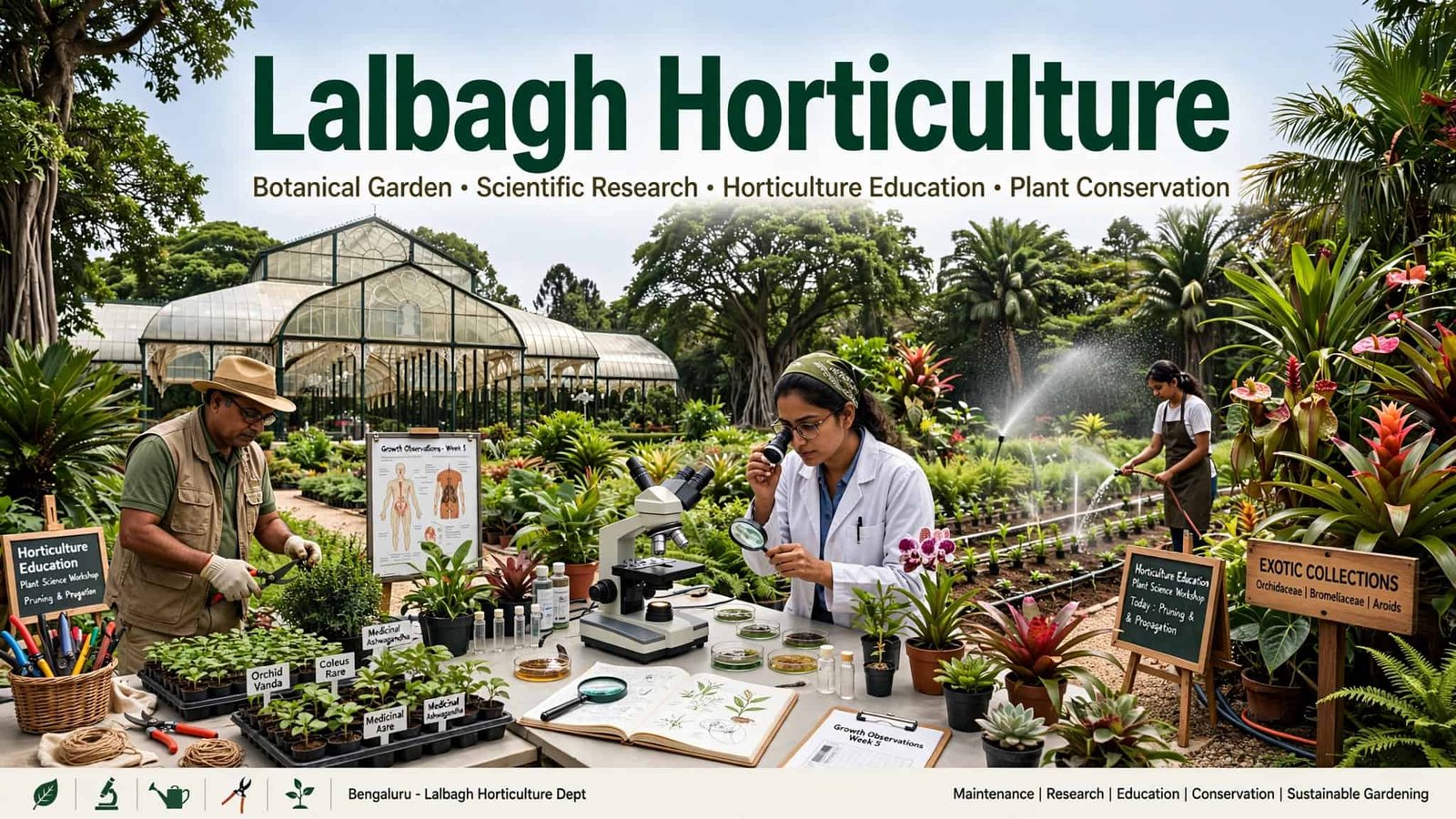
Lalbagh Horticulture: How the Garden Is Managed & Maintained

Suresh Kumar is the founder and editor of LalbaghBotanicalGarden.com, a website dedicated to helping visitors plan their trips to Lalbagh Botanical Garden with accurate, well-researched information on timings, fees, history, and attractions. Content is compiled and fact-checked using official sources and government tourism records.
Email: lalbaghgardenbangalore@gmail.com