








Lalbagh Deer Paddock is one of the lesser-known attractions inside Lalbagh Botanical Garden in Bengaluru, Karnataka. While Lalbagh is primarily famous for its historic Glass House, rare plants, flower shows, lake and ancient trees, the Deer Paddock adds a different aspect to the garden experience.
The paddock is a dedicated enclosure where visitors can observe deer within the larger green surroundings of Lalbagh. Historical accounts also show that Lalbagh once had a much broader zoological role, making the Deer Paddock part of an interesting chapter in the garden’s long history.
If you are planning a visit to Lalbagh, the Deer Paddock can be included along with other attractions such as the Glass House, Lalbagh Lake, Bandstand and the Kempegowda Watchtower.
Quick Facts About Lalbagh Deer Paddock
| Feature | Details |
|---|---|
| Attraction | Deer Paddock |
| Location | Lalbagh Botanical Garden, Bengaluru |
| State | Karnataka |
| Garden Area | About 240 acres |
| Setting | Green landscaped botanical garden |
| What visitors may see | Deer and surrounding greenery |
| Garden management | Department of Horticulture, Government of Karnataka |
| Best combined with | Glass House, Lake, Bandstand and other Lalbagh attractions |
Lalbagh Botanical Garden covers around 240 acres in southern Bengaluru and is managed by the Department of Horticulture, Government of Karnataka. Karnataka Tourism specifically lists the Deer Paddock among Lalbagh’s attractions.
What Is the Lalbagh Deer Paddock?
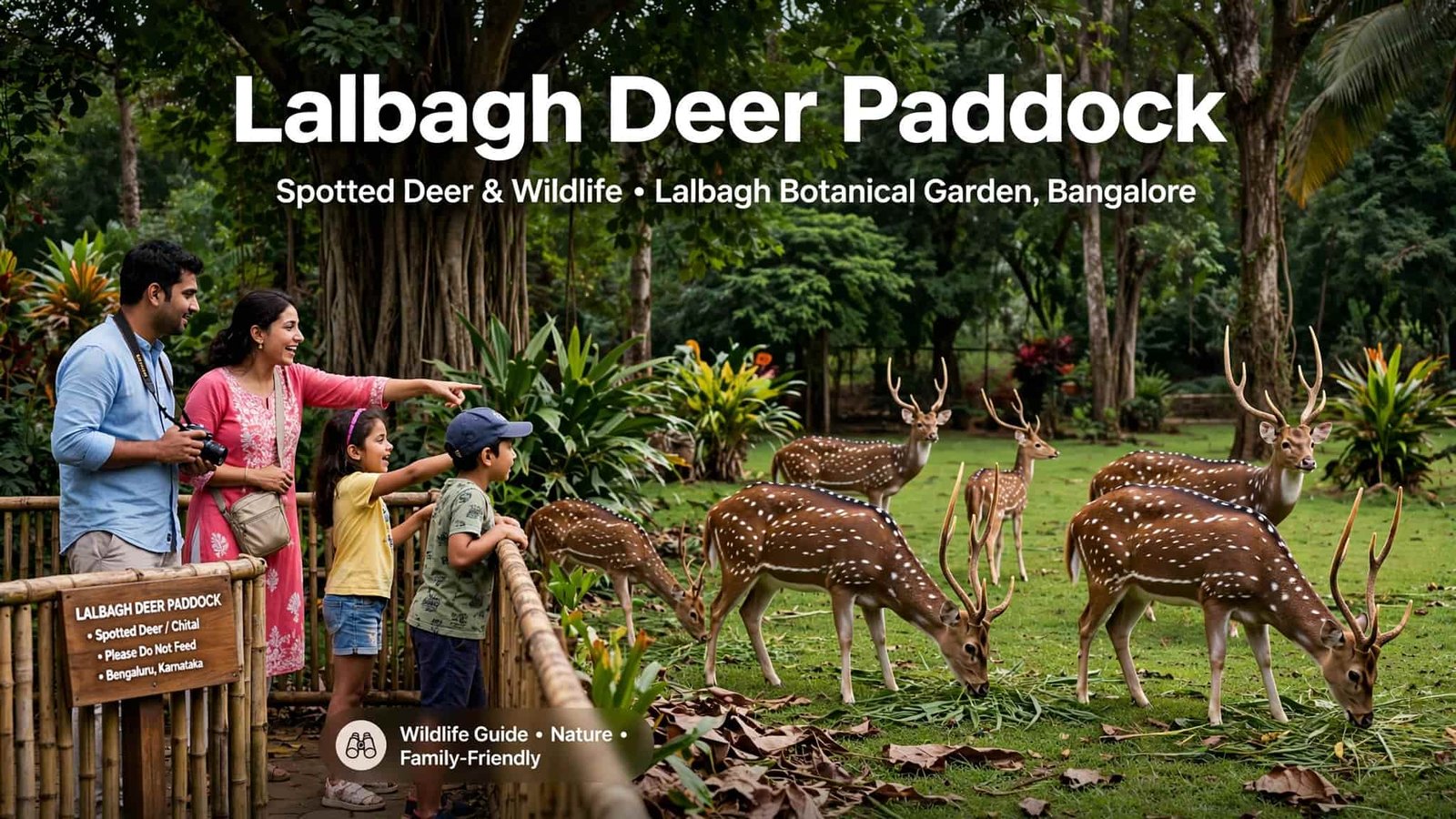
The Lalbagh Deer Paddock is a designated enclosure within the botanical garden where visitors can observe deer.
Unlike a conventional zoo, Lalbagh’s primary purpose is botanical and horticultural. The garden is known for its extensive collection of plants, historic landscapes and horticultural activities. The Deer Paddock is therefore best understood as one of the garden’s smaller wildlife-related attractions, rather than as a separate zoo.
Karnataka Tourism describes the paddock as an enclosure where visitors can observe spotted deer in a green setting.
For visitors interested in nature photography or simply exploring the quieter parts of Lalbagh, the paddock can be an interesting stop during a longer walk through the garden.
History of the Deer Paddock at Lalbagh

The history of the Deer Paddock is connected with the wider history of Lalbagh.
Lalbagh was established by Hyder Ali in 1760 and was later expanded and developed under Tipu Sultan. The garden subsequently went through several stages of development under British horticultural administration before becoming an important horticultural institution in modern Karnataka.
Interestingly, Lalbagh was not always limited to plants and horticulture. Historical accounts describe a period when the garden also had a zoological collection.
A report published by The Economic Times notes that during the 1860s, Lalbagh had a populated Deer Paddock along with animals including a black panther, tigers and kangaroos. It also mentions that the garden had a pigeon house containing more than 100 birds.
This gives the Deer Paddock a connection to an older chapter in Lalbagh’s history, when the garden had a broader collection of animals in addition to its botanical importance.
Lalbagh’s Changing Role
Over the years, Lalbagh developed increasingly around horticulture, botanical collections, education and public recreation.
Today, the garden is particularly known for its plant diversity, historic structures, flower shows and landscaped areas. Karnataka Tourism describes Lalbagh as a major botanical garden with more than 1,854 plant species.
The Deer Paddock remains one of the attractions visitors can look for while exploring the extensive garden.
Where Is Lalbagh Deer Paddock Located?
The Deer Paddock is inside Lalbagh Botanical Garden in southern Bengaluru.
Lalbagh itself is located in the Mavalli area of Bengaluru and occupies a large 240-acre site. Because the garden is extensive, visitors should allow time to walk between attractions rather than expecting everything to be immediately next to the entrance.

The garden has several entrances and a large internal network of paths. The exact walking route to the Deer Paddock can depend on which entrance you use and the areas open or accessible during your visit.
For this reason, it is useful to check the garden’s current signage or ask the staff at the entrance for directions to the Deer Paddock.
What Can Visitors See at the Deer Paddock?
The main attraction is, naturally, the deer enclosure.
Depending on conditions and where the animals are within the enclosure, visitors may be able to observe deer moving around, resting or feeding. The surrounding vegetation also makes the area different from the more formal architectural attractions elsewhere in Lalbagh.
1. Spotted Deer
Karnataka Tourism identifies the deer at the paddock as spotted deer. Visitors may be able to see them from the designated viewing area.
Because animals are unpredictable, sightings and viewing distances can vary. It is better to treat the paddock as a wildlife-observation stop rather than expecting the deer to remain in one particular location.
2. Green Surroundings
The paddock is situated within Lalbagh’s larger botanical environment. The combination of vegetation and the enclosure provides a relatively natural-looking setting for observing the animals.
This also makes the area appealing to visitors who enjoy combining botanical sightseeing with wildlife observation.
3. A Different Side of Lalbagh
Many first-time visitors associate Lalbagh mainly with the Glass House and flower displays. The Deer Paddock shows another side of the garden and reflects its more varied historical development.
Is the Deer Paddock a Zoo?
No, Lalbagh should not be confused with a conventional zoo.
Lalbagh is fundamentally a botanical garden and horticultural institution. Its major role involves plant collections, horticulture, conservation, education and public recreation.
The Deer Paddock is one attraction within the garden rather than a standalone zoological park.
This distinction is useful when planning your visit. Someone specifically looking for a large collection of different animal species would be looking for a different type of attraction, while visitors exploring Lalbagh can include the Deer Paddock as one stop among many.
Other Attractions to See Near Lalbagh Deer Paddock

A visit to the Deer Paddock makes more sense when combined with other attractions inside Lalbagh.
Lalbagh Glass House
The Glass House is arguably Lalbagh’s best-known landmark. It was constructed in the late 19th century and became closely associated with the garden’s famous flower shows.
Lalbagh Lake
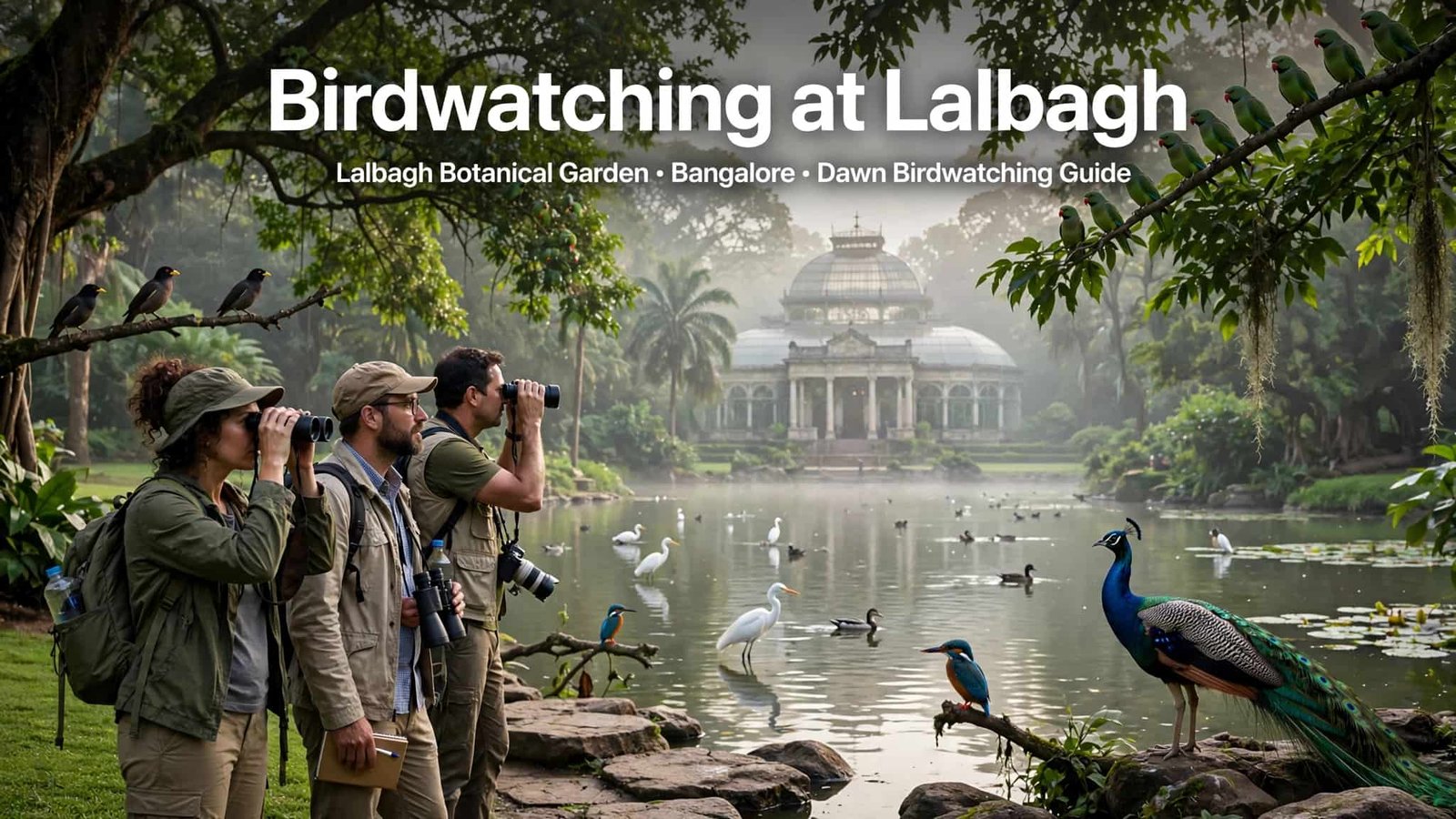
Lalbagh Lake is another prominent feature of the garden. The lake and surrounding greenery provide opportunities for relaxing walks and observing birds.
Bandstand
The historic Bandstand is another architectural feature within Lalbagh. Historical descriptions of the garden include the Bandstand among its notable structures.
Kempegowda Watchtower
The garden also contains a historic watchtower associated with Kempe Gowda II. It stands on an ancient rocky formation and is one of Lalbagh’s better-known historical features.
Botanical Collections
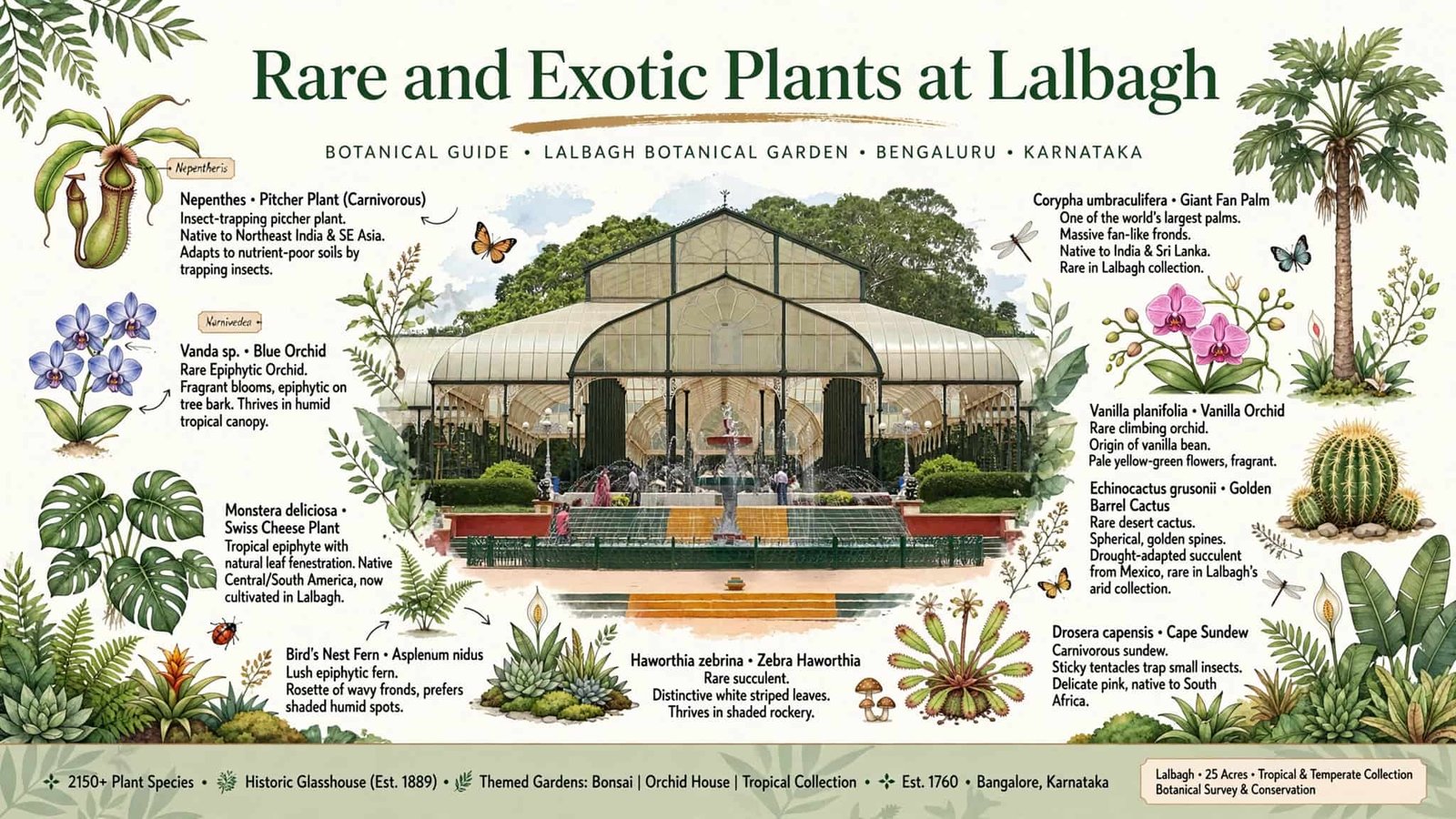
For plant lovers, the botanical collections are arguably the biggest reason to spend several hours inside Lalbagh. The garden contains a wide variety of native and exotic plants and has played an important role in horticulture in Karnataka.
Best Time to Visit the Deer Paddock
The best time to explore Lalbagh generally depends on what you want to see.
Early morning can be particularly pleasant for walking because the garden is cooler and quieter than during the warmer parts of the day. It can also be a comfortable time for nature observation.
If your main goal is to see the deer, remember that animal activity can vary. There is no guarantee that the deer will always be visible or active when you reach the enclosure.
For a more complete Lalbagh experience, consider allowing several hours rather than visiting only the Deer Paddock.
Photography at the Deer Paddock
The Deer Paddock can be an interesting location for casual nature photography.
Visitors should, however, follow the garden’s rules and avoid disturbing the animals. Do not attempt to enter restricted areas, feed the deer or make loud noises to attract them.
Lalbagh has rules intended to protect its plants and public spaces, and visitors should follow any instructions displayed at the garden during their visit. Recent visitor guidance has also highlighted restrictions intended to protect Lalbagh’s botanical environment.
Things to Remember Before Visiting
Keep these simple points in mind:
- The Deer Paddock is inside Lalbagh Botanical Garden.
- It is one attraction among many within the 240-acre garden.
- Deer sightings can vary depending on animal activity.
- Do not feed or disturb the animals.
- Follow signs and instructions from garden staff.
- Wear comfortable footwear because Lalbagh involves considerable walking.
- Combine the paddock with other attractions such as the Glass House, Lake and Bandstand.
- Check current garden rules, timings and entry information before travelling because visitor arrangements can change.
Frequently Asked Questions
Where is the Deer Paddock in Bengaluru?
The Deer Paddock is located inside Lalbagh Botanical Garden in southern Bengaluru, Karnataka.
Can visitors see deer at Lalbagh?
Yes. The Deer Paddock is a designated enclosure where visitors can observe deer. Karnataka Tourism describes the enclosure as a place to see spotted deer in a green setting.
Is Lalbagh Deer Paddock part of a zoo?
No. Lalbagh is primarily a botanical garden and horticultural institution. The Deer Paddock is one of its attractions.
What animals were historically kept at Lalbagh?
Historical accounts describe Lalbagh as having a wider zoological collection during the 19th century, including deer, a black panther, tigers and kangaroos.
How old is Lalbagh Botanical Garden?
Lalbagh’s origins date to 1760, when Hyder Ali established the garden. It was subsequently expanded and developed under Tipu Sultan and later horticultural administrators.
What else should I see at Lalbagh?
Besides the Deer Paddock, visitors can explore the Glass House, Lalbagh Lake, Bandstand, Kempegowda Watchtower, botanical collections, gardens and other historic features.
Final Thoughts
The Lalbagh Deer Paddock is a relatively small but interesting attraction within one of Bengaluru’s most historic gardens. Its significance becomes even more interesting when viewed against Lalbagh’s history: the garden began as a royal garden in the 18th century, developed into an important horticultural centre, and at one stage also contained a broader zoological collection.
Today, visitors can combine a look at the Deer Paddock with Lalbagh’s much larger botanical and historical attractions. If you enjoy gardens, photography, history and nature, it can be a worthwhile stop during a walk through Lalbagh Botanical Garden.
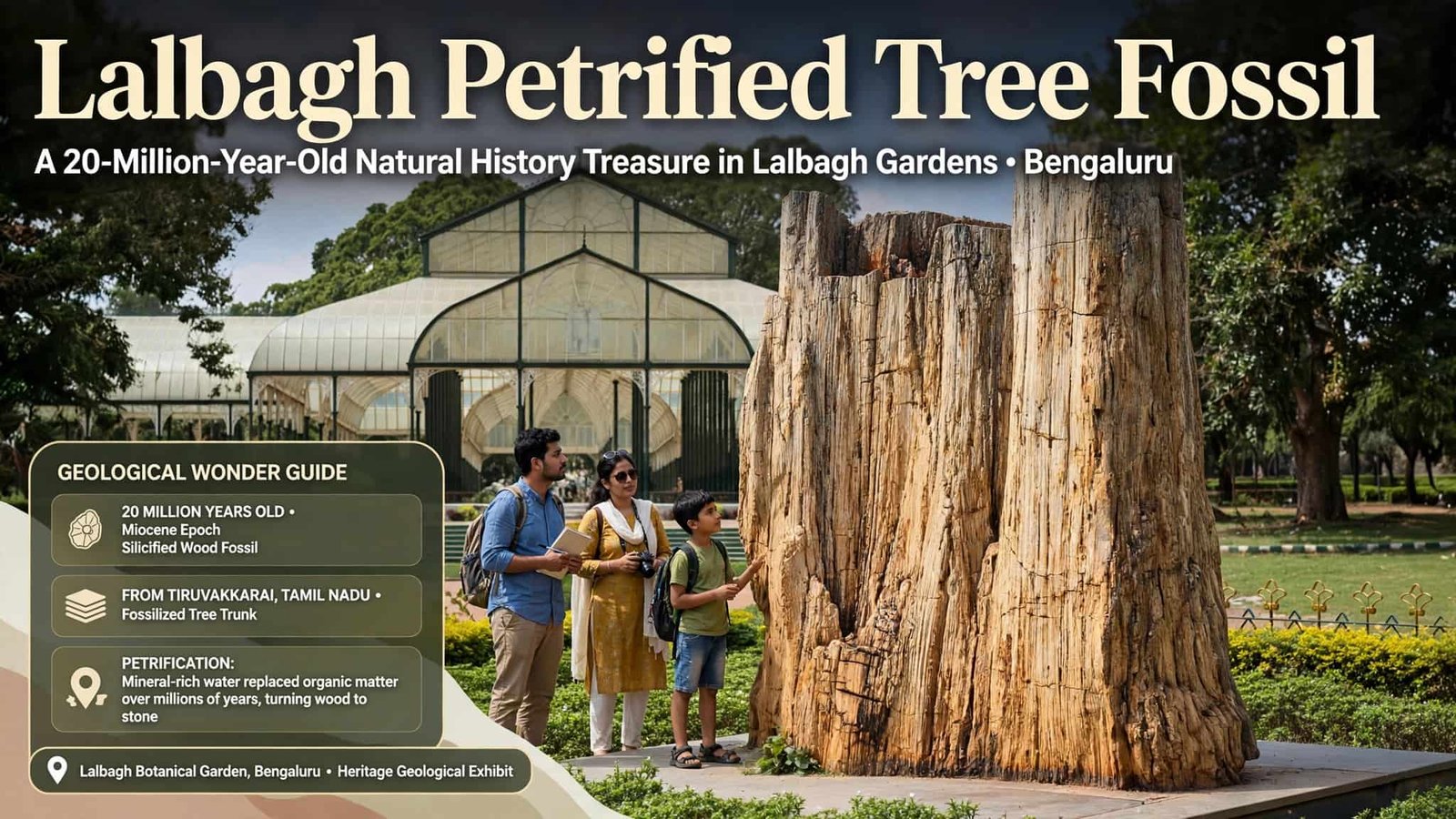
Check also this: Lalbagh Petrified Tree Fossil: Geological History & Where to See It

Suresh Kumar is the founder and editor of LalbaghBotanicalGarden.com, a website dedicated to helping visitors plan their trips to Lalbagh Botanical Garden with accurate, well-researched information on timings, fees, history, and attractions. Content is compiled and fact-checked using official sources and government tourism records.
Email: lalbaghgardenbangalore@gmail.com