








A clock usually belongs on a wall, tower or public building.
At Lalbagh Botanical Garden, the clock becomes part of the landscape itself.
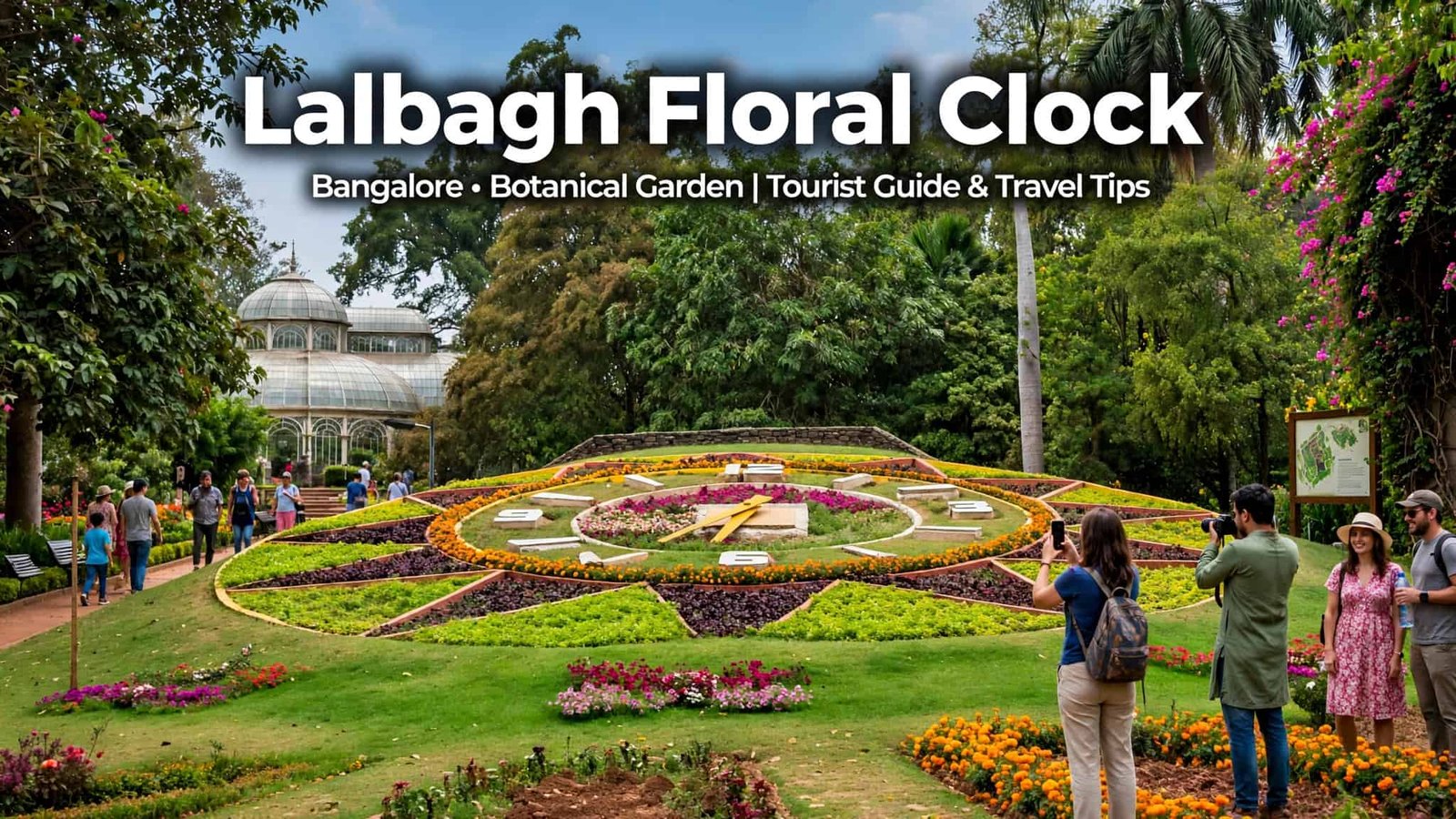
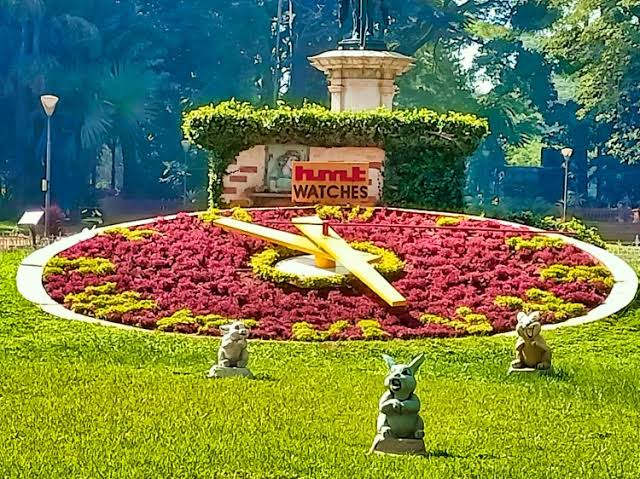
The Lalbagh Floral Clock is one of the garden’s distinctive attractions: a large clock incorporated into a landscaped floral display and surrounded by the well-known Snow White and Seven Dwarfs figures. Incredible India describes the clock as approximately seven metres in diameter.
It is an unusual combination of horticulture, public landscaping and timekeeping—and that is what makes the attraction worth looking at beyond a quick photograph.
What Is the Floral Clock at Lalbagh?
The Floral Clock is a large garden installation in which the clock face is integrated into a planted landscape.
Instead of placing the timepiece on a conventional structure, the design makes the clock part of the garden.
The surrounding flower beds give it its name and visual character, while the nearby Snow White and Seven Dwarfs figures add a distinctly playful element to the scene. Official tourism material specifically highlights these figures around the clock.
This makes the attraction different from the garden’s older heritage features.
The Kempegowda tower connects visitors with Bengaluru’s early history.
The Peninsular Gneiss connects Lalbagh with geological history.
The Floral Clock represents a much more modern form of horticultural display.
The Clock Is Part of the Garden Design
One of the interesting things about the Floral Clock is that it is not simply a clock placed beside some flowers.
The plants are part of the visual composition.
The circular clock face provides the central form, while surrounding beds and landscaping frame it. That means its appearance can change with seasonal planting and maintenance.
This is one reason a floral clock works particularly well inside a botanical garden.
The timekeeping element gives the display a practical identity, while the plants make it part of the surrounding landscape.
Karnataka Tourism describes the Floral Clock as a feature that combines design and functionality.
How Does a Floral Clock Work?
There are really two separate systems involved.
The first is the clock mechanism that keeps time.
The second is the horticultural display that creates the appearance of a floral clock.
The plants do not mechanically “tell time.” They form the visible design around the clock face and help turn an ordinary timepiece into a garden attraction.
This distinction is useful because the name can otherwise make it sound as though the plants themselves operate the clock.
The exact current operating condition of the Lalbagh installation can vary, so visitors should not assume that the hands will necessarily be functioning at every visit. The floral landscaping remains the defining visual feature regardless.
The Snow White and Seven Dwarfs Connection
The figures surrounding the Floral Clock are one of the easiest ways to recognize the installation.
They give the area a family-friendly character and distinguish Lalbagh’s clock from a conventional public clock.
Official Incredible India material specifically notes that the seven-metre clock is surrounded by Snow White and the Seven Dwarfs figures.
This combination of flowers, clock design and familiar storybook figures is one reason the location is often photographed.
For children, the figures can be more memorable than the clock itself.
For adults interested in landscape design, the more interesting feature is the way the installation sits within the garden.
Where Does the Floral Clock Fit Into Lalbagh’s History?
The Floral Clock is not part of Lalbagh’s original 18th-century history.
That distinction matters.
Lalbagh began under Hyder Ali in 1760, and its early history is associated with royal gardening and later horticultural development. The Floral Clock belongs to a much later phase of the garden’s evolution.
This is actually a useful way to understand Lalbagh as a whole.
The garden has never been frozen in one historical period.
It contains:
- an ancient geological formation
- historical watchtowers
- colonial-era architecture
- old trees
- botanical collections
- modern horticultural displays
The Floral Clock belongs to that later layer.
Why the Floral Clock Matters in a Botanical Garden
At first glance, a clock may seem unrelated to botany.
But the attraction demonstrates an important idea in garden design: plants can be used not only for their natural appearance but also to create shapes, patterns and functional landscapes.
Lalbagh has several examples of this approach.
The Topiary Garden uses plants trained into forms.
The Bonsai Garden demonstrates controlled cultivation on a miniature scale.
The Floral Clock uses plants and landscaping to frame a recognizable mechanical object.
Together, these features show how horticulture can become a form of visual design.
What Makes It Different From the Glass House?
The Glass House is one of Lalbagh’s major architectural landmarks and is strongly associated with the garden’s flower shows.
The Floral Clock serves a different purpose.
The Glass House is a building.
The Floral Clock is a landscaped installation.
The Glass House is associated with large horticultural exhibitions.
The Floral Clock is something visitors can encounter as part of the everyday garden landscape.
That distinction is useful when planning a visit because the two attractions offer very different experiences even though both are strongly associated with Lalbagh’s horticultural identity.
How to See the Floral Clock Without Rushing
The Floral Clock is easy to treat as a “two-minute photo stop.”
Instead, take a moment to look at the complete composition.
Notice:
- the circular clock face;
- the flower beds surrounding it;
- the Snow White and Seven Dwarfs figures;
- the paths and landscaping around the display;
- how the installation fits into the larger garden.
If you are interested in photography, the attraction also works better when you photograph the entire landscaped setting rather than cropping tightly around the clock.
A Small Attraction With a Different Story
The Floral Clock does not have the geological age of Lalbagh Rock or the historical importance of the Kempegowda tower.
Its value is different.
It shows how a historic botanical garden can continue adding new forms of horticultural design without losing its older identity.
That is perhaps the most interesting thing about Lalbagh: you can move through several centuries of history without leaving the garden.
The rock represents deep geological time.
The watchtower represents early Bengaluru.
The garden represents 18th- and 19th-century horticultural development.
And the Floral Clock represents a later chapter in the garden’s continuing evolution.
Also See: Kempegowda Watch Tower at Lalbagh: History & Significance

Suresh Kumar is the founder and editor of LalbaghBotanicalGarden.com, a website dedicated to helping visitors plan their trips to Lalbagh Botanical Garden with accurate, well-researched information on timings, fees, history, and attractions. Content is compiled and fact-checked using official sources and government tourism records.
Email: lalbaghgardenbangalore@gmail.com